
Let’s be honest for a moment. Most B2B websites in 2025 are little more than digital paperweights. They look polished, they’ve got tasteful typography, and they’ve got a “Meet the Team” page featuring someone holding a coffee cup gazing thoughtfully into the middle distance. But when it comes to actually moving the needle on revenue? Crickets.
We’ve entered an era where “content is king” has been firmly dethroned by “relevance is everything.” If your website is functioning as a brochure that visitors glance at before bouncing back to their LinkedIn feed, you aren’t just failing at marketing — you’re leaving significant revenue on the table.
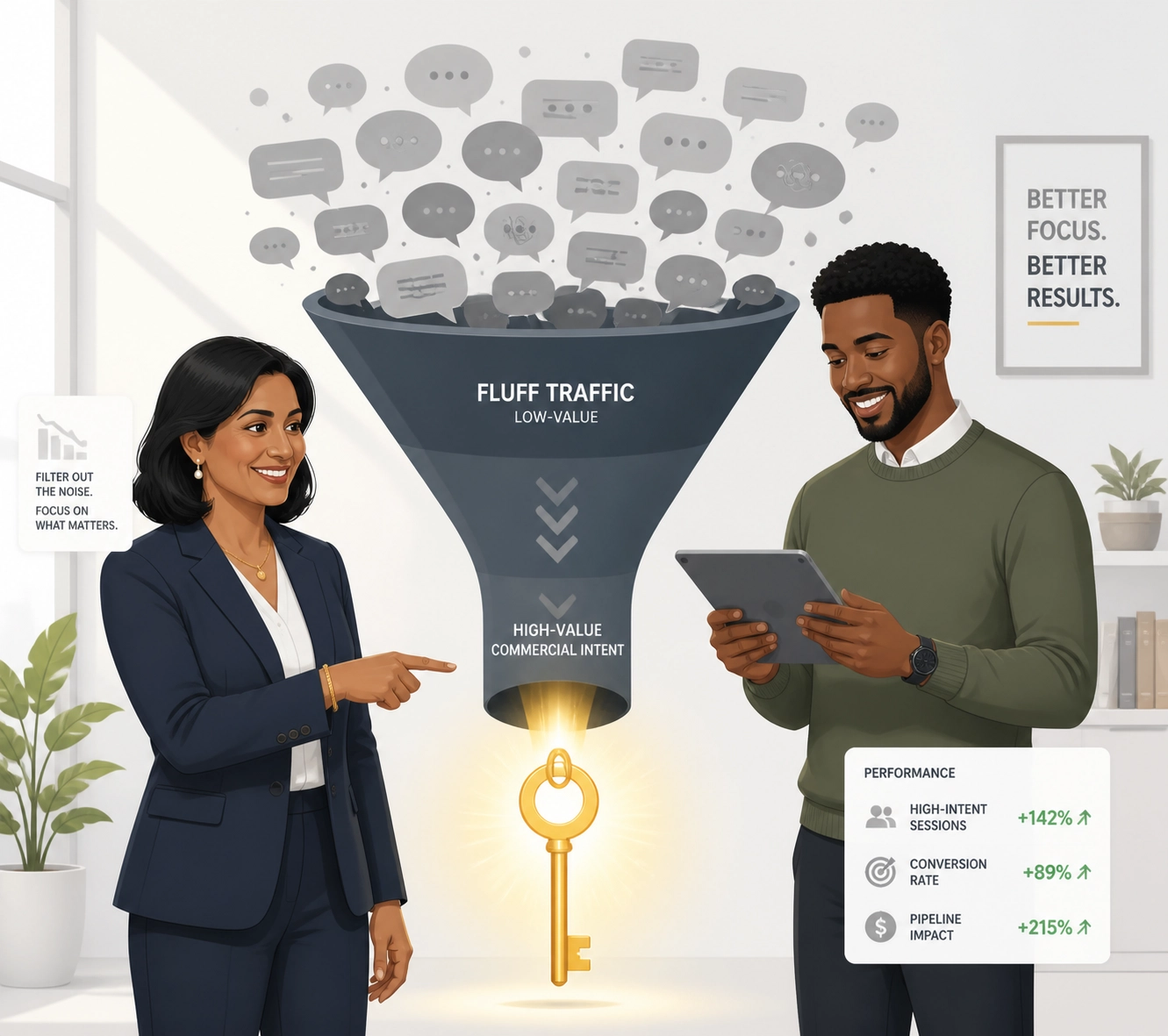
The problem isn’t a lack of traffic. Most business owners are obsessed with traffic. The problem is that the traffic is, well, a bit rubbish. It’s “fluff traffic” — people searching for “what is a webinar?” rather than organisations looking to hire a specialist digital media agency to run their global summit.
Zest City, a UK digital agency specialising in website marketing, web design, and digital event recruitment, works with B2B clients across Kent, Essex, and beyond who are tired of high bounce rates and anaemic lead counts. Here are seven high-impact website marketing techniques that actually fill your pipeline and turn casual browsers into committed buyers.
1. Ditch the Ego: Focus on Commercial Intent Keywords
The single biggest mistake we see in B2B digital marketing is what we call “Vanity SEO.” This is when a business spends thousands of pounds trying to rank for a broad, generic term — purely so it can be shown off at a board meeting.
If you sell specialist virtual event staffing, ranking for “jobs” is functionally useless. You’ll attract students and entry-level jobseekers, none of whom will ever become clients. The person you actually want is the one searching for “virtual event staffing agency UK 2025.” That is commercial intent. It’s specific. It signals that the searcher has a defined problem, a budget, and is actively evaluating solutions.
By narrowing your keyword focus to these high-intent, bottom-of-funnel phrases, your overall traffic numbers may fall — but your conversion rate will rise sharply. Quality will always beat quantity when your goal is pipeline, not pageviews.
2. The “Assist Content” Revolution
We need to stop treating blog posts and landing pages as isolated islands. In reality, nobody reads a single article and immediately reaches for their credit card. They browse, they poke around, they leave and come back a fortnight later.
The secret to a healthy pipeline is identifying your “assist content” — the pages that sit in the middle of the buyer journey. Use your analytics platform to find the pages people visit just before they navigate to your contact page. It might be a specific case study, a service comparison, or a deep dive into your AI integration services.
Once you’ve identified these “bridge” pages, treat them like gold. Optimise them, keep them up to date, and — critically — ensure they have a clear, logical next step. If someone is reading about how you supported a major virtual event platform with staffing, don’t leave them stranded at the bottom of the page. Point them directly to your permanent digital event placement services or whichever offering is the most relevant next step in their journey.
3. Interactive First-Touches (Because Reading Is Hard)
Attention is genuinely scarce. If you’re still relying solely on 2,000-word whitepapers to capture leads at the top of the funnel, you are losing prospects before they’ve even started reading.
The most effective website marketing techniques right now involve interactivity. Instead of asking someone to download a static PDF, give them an ROI calculator. Instead of a flat “Services” list, offer a 60-second quiz that identifies exactly which recruitment model — permanent, temporary, or fixed-term — fits their business needs.
Interactive content works because it delivers immediate, personalised value. It’s a two-way exchange. It also hands you a wealth of data about your prospect before you’ve even picked up the phone. When you already know their specific pain points — because they just told your calculator — every subsequent conversation becomes sharper and more relevant.
4. The 5-Minute Rule and Above-the-Fold Clarity
It shouldn’t need saying, but: if a visitor has to scroll before they understand what you actually do, they’ll leave. Your above-the-fold real estate — everything visible before the user scrolls — needs to answer three questions within three seconds:
- What do you do?
- How does that help me?
- What should I do next?
This is as much a website design challenge as it is a marketing one. The layout, hierarchy, and copy all need to work together to guide the visitor towards a decision — not dazzle them into confusion.
And once they do click that “Contact Us” button, speed becomes your only metric that matters. Research consistently shows that responding to an inbound lead within five minutes increases your chances of qualification by close to 900%. Use automation to trigger an instant, human-sounding acknowledgement, then get a real person on the phone as quickly as possible. The leads you’ve worked so hard to generate deserve that urgency.
5. Social Proof That Isn’t Boring
“We are the best in the business” is a fluff statement. Nobody believes it, and search engines certainly don’t reward it.
Credible website marketing techniques depend on external validation — but in 2025, a disembodied text quote attributed to “J. Smith, Marketing Director” no longer moves the needle. Prospects want evidence.
Show your working. Instead of claiming expertise in digital event recruitment, link to a case study that documents exactly how many placements were made, the time-to-hire, and the retention rate six months later. Use short video testimonials where real clients describe the specific problem you solved for them. When a prospect sees hard data and a recognisable name vouching for your work, the trust barrier effectively disappears.

6. Strategic Retargeting (The Gentle Nudge)
Most prospects won’t convert on their first visit. That’s not a failing — it’s human nature. We’re distracted, we’re busy, and there are approximately forty browser tabs competing for attention at any given moment.
Retargeting is the discipline of reconnecting with those visitors across the web in a relevant, non-intrusive way. The key word is relevant. If someone spent time exploring your social media marketing services, don’t serve them a generic agency ad. Show them a piece of content specifically about measuring social media ROI, or a short case study from a client in their sector.
By staying visible with genuinely helpful content, you significantly increase the likelihood that when the prospect is ready to act, your business is the first name that comes to mind. Well-executed retargeting campaigns can increase conversion rates by as much as 70%. That’s not stalking — that’s being helpful at precisely the right moment.
7. Stop Tracking Clicks, Start Tracking Pipeline
This is perhaps the most important mindset shift of all. Clicks, impressions, and social media reach are comfort metrics — they feel like progress, but they rarely correlate with revenue. The businesses that consistently outperform their competitors are the ones that have connected their marketing data directly to their sales outcomes.
Set up proper attribution in your analytics. Which pages, campaigns, and content pieces are genuinely driving enquiries? Which traffic sources produce prospects who actually close? Once you know those answers, you can double down on what works and ruthlessly cut what doesn’t.
A professionally structured website marketing strategy is built around pipeline metrics from day one — not as an afterthought when the quarterly numbers disappoint.
Ready to stop guessing and start filling your pipeline? Zest City offers a free digital audit for businesses in Kent and Essex — covering your website, SEO, and marketing strategy. Claim your free audit today and find out exactly where your website is losing leads.
Frequently Asked Questions: Website Marketing Techniques
What are the most effective website marketing techniques for B2B companies?
The most effective website marketing techniques for B2B businesses focus on commercial intent — targeting buyers who are actively evaluating solutions rather than those in early research phases. These include bottom-of-funnel SEO targeting specific, high-intent search terms; assist content that bridges the gap between awareness and conversion; interactive tools such as ROI calculators or qualification quizzes; data-backed social proof including case studies and video testimonials; strategic retargeting with segmented, relevant messaging; and pipeline-focused analytics that connect marketing activity directly to revenue outcomes.
How do I attract high-quality B2B leads rather than general traffic?
The most reliable way to attract high-quality B2B leads is to optimise your website for commercial intent keywords — search phrases that signal the user is ready to buy, not just browse. Pair this with clear, benefit-led messaging above the fold that immediately communicates who you help and how. Supporting content such as case studies, client testimonials with verifiable metrics, and interactive qualification tools also accelerates the trust-building process and filters out tyre-kickers earlier in the journey.
What is “assist content” and why does it matter for lead generation?
Assist content refers to the pages on your website that a visitor views just before they make contact or convert. These pages act as “bridges” in the buyer journey — not quite the final destination, but instrumental in moving the prospect closer to a decision. Identifying and optimising these pages (typically case studies, service comparison pages, or in-depth guides) is one of the highest-return website marketing activities you can undertake, because you’re improving pages that already have commercial intent baked in.
How quickly should I respond to an inbound website enquiry?
Research consistently shows that responding to an inbound lead within five minutes of submission can increase your likelihood of qualification by up to 900% compared with responding after 30 minutes. The reason is simple: a prospect who has just filled in a form is at peak intent. Delay gives them time to contact a competitor, reconsider, or simply get distracted. Using marketing automation to send an immediate, personalised acknowledgement — followed by a human call or message as quickly as possible — is best practice for any B2B organisation serious about pipeline conversion.
Is retargeting still effective, and how should it be used?
Yes — when done correctly, retargeting remains one of the most cost-effective website marketing techniques available. The critical factor is segmentation and relevance. Retargeting every website visitor with an identical generic advert is lazy and increasingly ignored. Instead, segment your retargeting audiences by the pages they visited and serve them content or offers that directly relate to their demonstrated interest. A visitor who browsed your social media marketing services should see a case study about social media ROI — not your homepage banner. Properly segmented retargeting campaigns can lift conversion rates by up to 70%.
How does website design affect marketing performance?
Website design and marketing performance are inseparable. The clearest copy in the world will underperform if it’s buried in a confusing layout. Above-the-fold clarity — ensuring that a visitor understands what you do, how it helps them, and what to do next within three seconds of arriving — is a design and marketing challenge simultaneously. Site speed, mobile responsiveness, logical page hierarchy, and conversion-optimised landing pages all directly influence bounce rate, time on site, and lead volume. A website built without pipeline performance in mind is a liability, not an asset.
What metrics should I track to measure website marketing success?
Move beyond vanity metrics such as total page views, social media impressions, and raw traffic volume. The metrics that matter for B2B pipeline growth include: conversion rate by traffic source, cost per qualified lead, lead-to-opportunity rate, assisted conversion paths (which content pieces appear most frequently before a conversion), retargeting engagement and conversion lift, and — above all — revenue attributed to specific marketing channels. Building a reporting framework around these pipeline metrics, rather than click-through rates, will fundamentally change how you allocate your marketing budget.
Want an expert second opinion on your current website marketing strategy? Zest City’s team of UK-based digital specialists offers tailored advice with no obligation. Get in touch with us today.
