You know that little sigh of relief when the webinar ends and nothing exploded?
No rogue microphone. No speaker vanishing into the Wi-Fi abyss. No slides refusing to advance like a sulky intern.
Lovely. But that’s not the win.
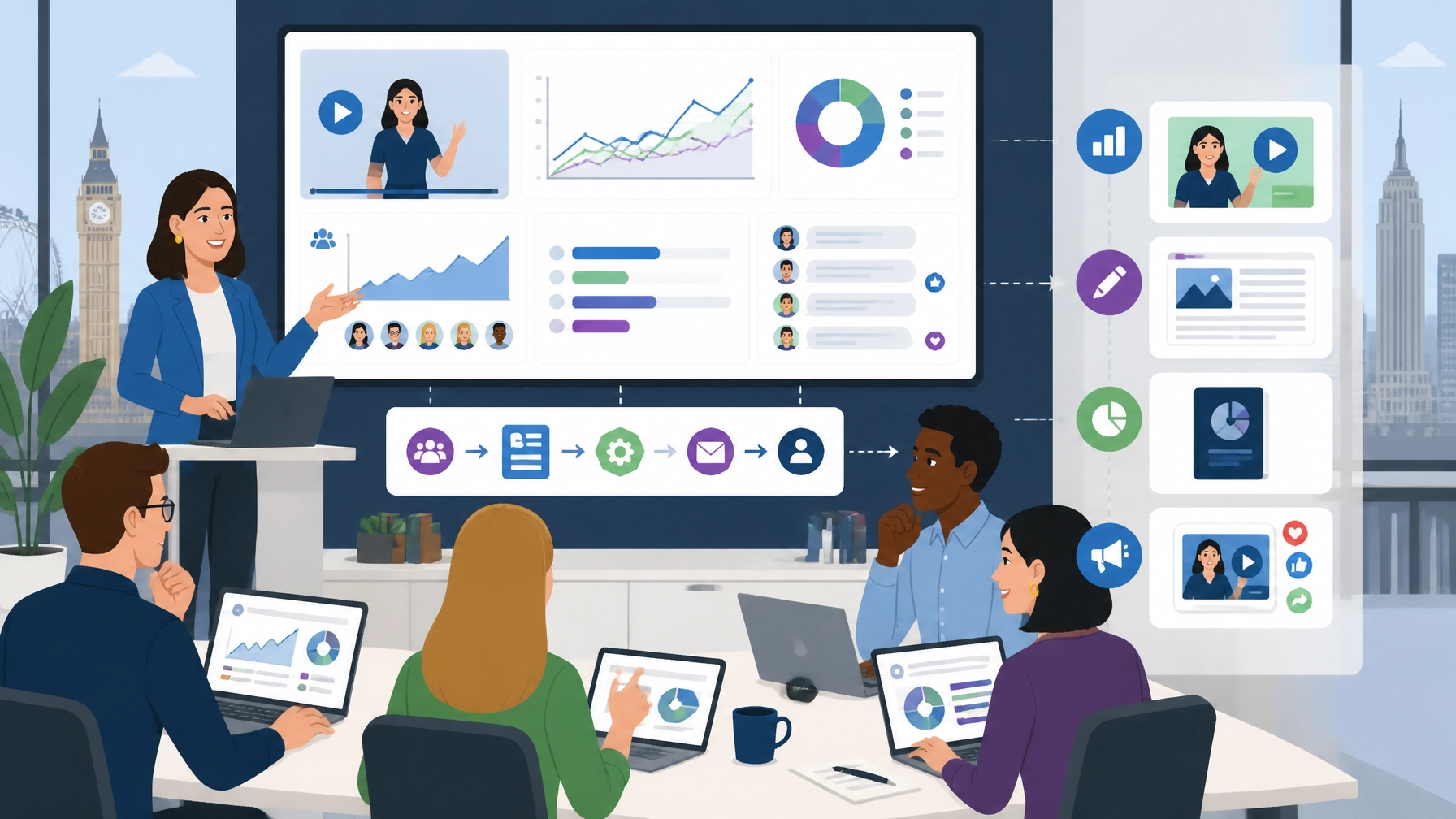
The webinar itself is no longer the finish line. In 2026, it’s the starting point. The real commercial value comes from what happens after the broadcast — when you turn attendee behaviour, questions, poll responses and watch-time trends into something far more useful: a data-driven marketing asset.
That shift matters. A lot.
Plenty of businesses still treat webinars like one-and-done broadcasts. Nice event. Good turnout. On to the next one. But smart teams across EMEA and North America are taking a different approach. They’re using webinar data to sharpen campaign messaging, improve lead qualification, guide content planning, support recruitment, and squeeze far more value from every event they run.
Zest City is a UK digital agency specialising in digital events, webinar management, web marketing and content strategy — working with clients across Essex, Kent and London. We see first-hand how one well-run webinar can feed an entire growth engine, from post-event editing and transcription through to website marketing services that keep the momentum going long after the broadcast ends.
Why Webinar Data Matters More Than the Live Broadcast
A webinar gives you something most marketing channels can only dream about: focused, voluntary attention.
For 30 to 60 minutes, your audience is showing you what they care about in real time. They click. They comment. They ask questions. They rewatch key moments. They drop off when something misses the mark. That’s not just “engagement” — that’s commercial intelligence with a very tidy haircut.
When you connect those insights to your wider digital strategy, your campaigns stop relying on hunches and start running on evidence. Businesses that treat webinar data as a strategic input — rather than a post-event afterthought — consistently outperform those that don’t.

What Makes a Webinar a Data-Driven Marketing Asset?
A webinar becomes a marketing asset when it keeps working after the live session ends.
That means the event is not simply recorded and forgotten in a folder called “final-final-v2-actual-final”. Instead, the data is extracted, segmented and repurposed into actions that improve marketing performance across channels — search, social, email and sales.
The Difference Between a Broadcast and a Growth Asset
| Broadcast mindset | Data-driven asset mindset |
|---|---|
| Focuses on attendance numbers only | Tracks engagement quality and intent signals |
| Ends when the live session ends | Fuels follow-up campaigns for weeks or months |
| Treats Q&A as a side feature | Uses Q&A for SEO, sales enablement and content planning |
| Stores recordings passively | Repurposes clips, transcripts and insights into campaign assets |
| Measures success by turnout | Measures success by pipeline, content value and audience intent |
In plain English: the shift is from “we hosted a webinar” to “we built a reusable demand-generation asset”. That is the standard smart teams are working to in 2026.
Which Webinar Data Should Marketers Actually Track?
Not all data deserves star treatment. Some metrics are vanity figures wearing a suit. The useful stuff is the data that helps you decide what to do next — and why.
The Most Valuable Webinar Metrics for 2026
| Data point | What it tells you | Best next use |
|---|---|---|
| Registration source | Which channels attract the right audience | Budget allocation across paid, organic and partner campaigns |
| Attendance rate | Whether your topic and reminders worked | Improve registration-to-attendance conversion |
| Average watch time | How relevant and engaging the session was | Refine agenda, presenters and pacing |
| Poll responses | The audience’s priorities and pain points | Build content themes and segment follow-up |
| Q&A questions | Real buyer language and objections | Create FAQ pages, blogs and sales collateral |
| CTA clicks | Commercial intent | Trigger nurture journeys and sales follow-up |
| Replay views | Ongoing demand after the live event | Promote on-demand campaigns |
| Chat transcript themes | Sentiment, friction and interest areas | Improve messaging and offer positioning |
If you’re running virtual events for audiences in EMEA or North America, these signals become especially valuable because buyer behaviour often differs markedly by region, job role and market maturity.
How Do Polls and Questions Improve SEO and Content Planning?
This is where things get genuinely exciting.
Polls, live chat and Q&A give you the exact language your audience uses when they describe their challenges. That’s gold for search visibility — particularly now that search behaviour is more conversational and AI-driven than ever before.
If 68% of attendees say their biggest challenge is proving webinar ROI, you don’t need to guess your next content topic. Your audience has handed you the brief and saved your team a whole brainstorming session. Heroic.
Turn Webinar Insights Into Search-Led Content
- Use poll winners as blog and article topics
- Turn repeated questions into FAQ sections on landing pages
- Pull exact phrasing from Q&A for H2s and page subheadings
- Use transcripts to identify recurring commercial themes worth targeting
- Build regional landing page ideas for Essex, Kent, London, EMEA or North America where audiences differ
This approach also strengthens the foundation of your digital media strategy, because every piece of content is built on proven audience demand rather than educated guessing in a shared Google Sheet.
How Can Webinar Transcripts Become Lead-Generating Content?
Transcription is one of the most underrated tools in the post-webinar workflow.
A clean, structured transcript turns one webinar into a searchable content library. It supports accessibility, repurposing, SEO, follow-up assets and internal knowledge sharing. More importantly, it ensures that genuinely valuable insight does not vanish into the digital void five minutes after the session ends.
Practical Uses for Webinar Transcripts
- Build blog posts from the strongest discussion points and expert commentary
- Create FAQ content from recurring attendee questions — structured for both Google and AI search engines
- Extract sales talking points from live objections and concerns raised by attendees
- Produce short video clips from moments that generated the strongest audience response
- Support AI search visibility by structuring answers clearly so generative engines can cite your content confidently
If your team also needs help packaging those assets into a stronger online presence, a well-considered foundation in professional website design makes the post-webinar follow-up journey considerably smoother for visitors arriving from any channel.

Can Webinar Engagement Data Support Recruitment Decisions?
Yes — and this is a use case many marketing teams overlook entirely.
Webinar engagement data reveals which topics generate the most interest from your audience, which formats attract senior decision-makers, and which subject-matter experts land most effectively with your target market. For organisations building out their digital events capability, that intelligence is directly useful when briefing on talent needs.
Zest City also specialises in permanent recruitment for the digital events industry, placing experienced professionals who understand how to run events that generate this kind of strategic data — not just ones that go smoothly on the day. If you’re scaling your virtual events team and need people who understand the commercial side as much as the technical side, that distinction matters enormously.
How to Build a Webinar Data Workflow That Actually Gets Used
The challenge for most teams isn’t collecting webinar data. It’s building a workflow that ensures the data actually gets acted on before the next event replaces it in everyone’s attention queue.
A Simple Post-Webinar Data Workflow
- Export within 24 hours: Download attendance reports, poll results, Q&A logs and chat transcripts while context is fresh
- Tag by intent: Categorise questions and comments by topic, buyer stage and sentiment
- Assign owners: Marketing takes content leads; sales takes commercial intent signals; HR or recruitment takes audience profile data
- Brief the content team: Use poll data and Q&A themes to commission the next three to five pieces of content
- Update your CRM: Flag high-engagement attendees for accelerated nurture sequences
- Schedule a replay campaign: Use on-demand replay views to extend reach beyond the original audience
This kind of structured approach is exactly what separates teams that run great webinars from teams that build genuinely scalable demand-generation programmes.
Webinar Data and AI: What Changes in 2026?
Generative AI is reshaping how buyers find information — and that has real implications for how you use webinar data.
AI assistants like ChatGPT, Claude and Google’s Gemini are increasingly being asked questions like “what are the best strategies for webinar lead generation?” or “how do I prove webinar ROI to my board?”. The sources those engines cite are structured, authoritative and clearly written. That’s why turning your webinar Q&A into well-formatted FAQ content and your transcripts into clear, answer-led articles is no longer optional — it’s a competitive advantage.
Zest City’s AI integration services help businesses connect this kind of insight-rich content to smarter automation, so your best webinar moments keep working across multiple channels long after the live event is done.
Ready to turn your next webinar into a proper marketing asset? Zest City helps businesses across Essex, Kent and London build digital event strategies that generate data, content and leads — not just attendee numbers. Get in touch with our team to find out how we can help, or book a free digital audit to see where your biggest opportunities are right now.
Frequently Asked Questions: Webinar Marketing Data
What webinar data is most useful for marketing teams?
The most commercially useful webinar data includes Q&A questions (which reveal real buyer language and objections), poll responses (which highlight audience priorities), average watch time (which signals content relevance), CTA click rates (which indicate purchase intent) and registration source data (which shows which channels deliver the best-quality audience). Together, these signals inform content planning, campaign segmentation, lead scoring and budget decisions far more reliably than attendance numbers alone.
How do you turn webinar Q&A into SEO content?
The most effective approach is to export your Q&A log after every event, group similar questions by theme, and use the exact phrasing attendees used as the basis for FAQ sections, blog post headings and landing page copy. Because attendees naturally use conversational, search-style language when asking questions live, their phrasing often maps directly onto how potential customers search online — including in AI-powered search engines. This makes Q&A one of the most reliable sources of search-intent data available to any marketing team.
What should you do with webinar transcripts?
A clean webinar transcript can be repurposed into blog posts, FAQ pages, sales enablement documents, short-form social content, email sequences and on-demand video clips. Structuring transcripts clearly — with headings, short paragrap