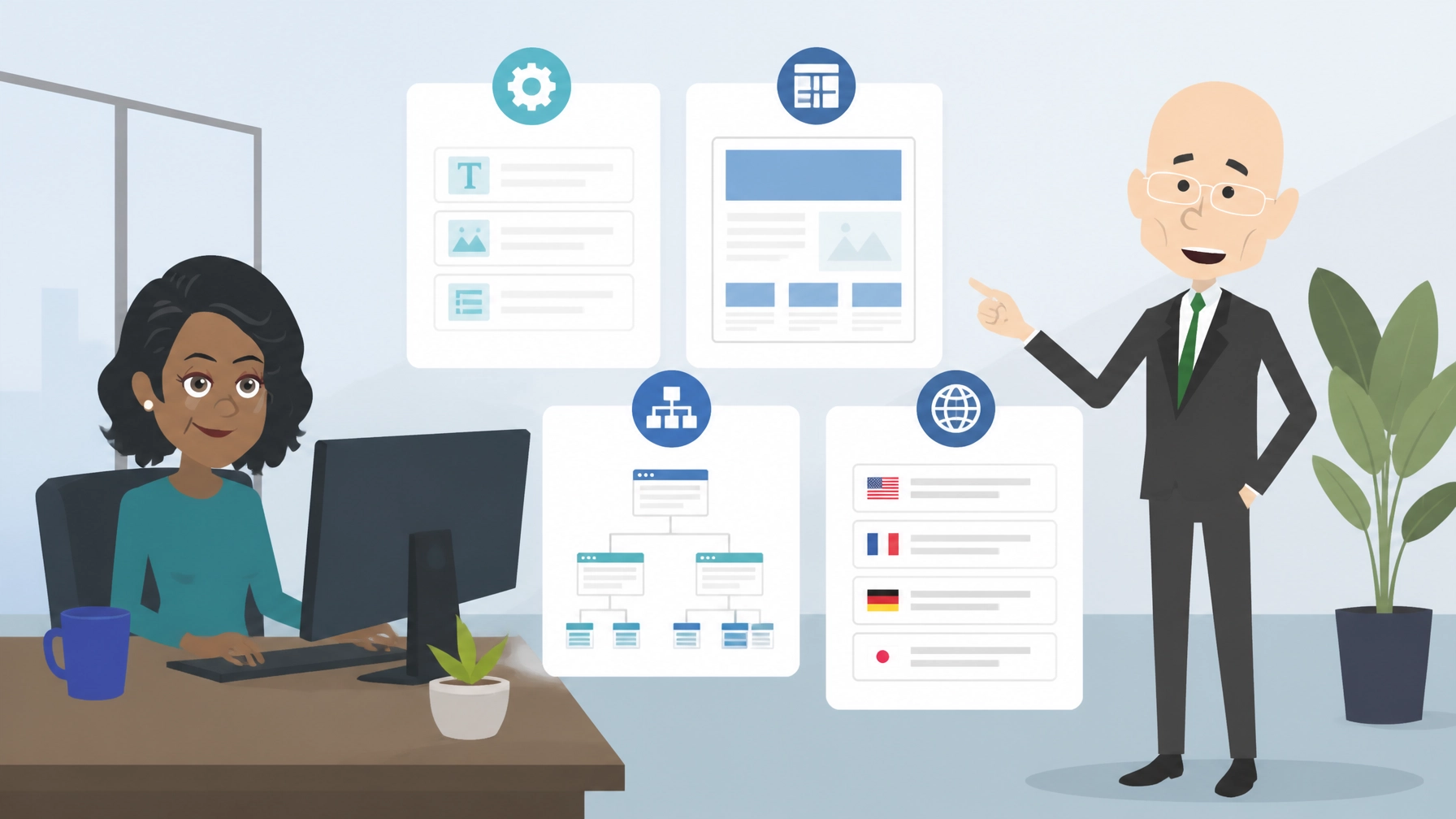
ProcessWire is a free, open-source CMS and framework that gives developers flexible control over content fields, templates and page structures. It suits agencies and organisations building custom websites where the content model does not fit a standard blog-style CMS. It is best when flexibility matters more than a large plug-in marketplace or beginner-first interface.
What is ProcessWire?
ProcessWire is a self-hosted content management system and application framework built with PHP. It uses a page tree, custom fields and templates rather than forcing every website into a standard post-and-page structure.
That approach makes it useful for websites with unusual content requirements. You might need separate fields for locations, services, team members, technical specifications, resources or event sessions. Instead of adapting a generic blog layout, you can create a content model that reflects how the organisation actually works.
The core software is free and open source. There are no per-site licence fees for the CMS itself. Your total cost will usually come from hosting, development time, maintenance and any optional commercial modules. As of 2026, some official Pro modules are available at additional cost, so the free core does not necessarily mean every advanced feature is free.

5 Best Features of ProcessWire
-
Flexible custom fields
Every content type can have its own fields. You can create text, image, date, number, page-reference, repeater and other field types, then assign them to specific templates.
For a small business, this means a team page can have fields for job title, biography, qualifications, social links and profile image without squeezing everything into one large text editor.
-
Clear page and content structures
The page tree provides a logical way to organise content. Pages can sit inside parent pages, giving websites a structure that mirrors their navigation, locations or business operations.
This is particularly useful for organisations with multiple services, regions or departments. A developer can create a structure that is easy to extend without rebuilding the whole site.
-
Developer-friendly API
The API gives developers direct access to pages, fields and relationships. Content can be found, filtered and displayed through PHP, without a proprietary template language controlling the front end.
The practical benefit is control. A developer can build a bespoke front end, integrate external data or create custom editorial tools while retaining a manageable content administration area.
-
Built-in multilingual support
Multilingual fields and language-aware URLs are available as part of the core approach. This reduces the need to assemble several separate extensions before launching an international website.
For a business serving customers in the UK, EMEA or North America, language variations can be planned into the content model from the beginning. That is usually safer than adding translation functionality after the site has grown.
-
Roles, permissions and modular features
Role-based access control allows administrators to decide what different users can view or edit. A content editor might update pages, while a marketing manager manages campaigns and a developer controls templates.
The platform is also modular. Optional modules can add forms, caching, debugging, page building and other functionality. This keeps the core relatively focused, although it means you must assess add-ons carefully before committing to a build.
ProcessWire in Action: 3 Examples
1. A services website with structured information
Example scenario: A professional services firm offers consultancy, training and support across several regions. Each service needs different information, including delivery method, audience, duration, downloadable resources and related case studies.
A conventional page editor could handle this, but the information may become inconsistent over time. A structured CMS can give editors dedicated fields for each item, making pages easier to maintain and allowing developers to create filters, comparison views or related-content sections.
2. A membership or organisation directory
Example scenario: A membership body needs a searchable directory of people and organisations. Each entry includes contact details, sectors, locations, membership level, accreditations and associated documents.
The page and field model is well suited to this type of project. Developers can create relationships between members, regions and categories, while authorised administrators update records through the CMS rather than editing website code.
3. A multilingual knowledge centre
Example scenario: An organisation publishes guidance for audiences in the UK, France, Germany and the United States. Articles need translated titles, summaries, body content, navigation labels and metadata.
Multilingual fields can help the team manage those variations in one system. The implementation still requires a translation process, editorial ownership and quality checks, but the CMS can provide a sound technical foundation for the content.
3 Things That Could Be Better
-
It is not the easiest choice for non-technical owners
The administration area is more focused than many mainstream platforms, but building the site usually requires PHP and front-end development knowledge. A business owner can learn to manage content, yet they may need professional help to create templates, fields and integrations.
If you want to install a theme, change a few settings and start publishing immediately, another CMS may feel more approachable.
-
The extension ecosystem is smaller
WordPress has a very large marketplace of themes, plug-ins and integrations. ProcessWire has useful modules and an active community, but the selection is more limited.
This is not automatically a disadvantage. A smaller ecosystem can mean fewer unnecessary additions. However, you may need custom development for features that would be available as a ready-made plug-in elsewhere.
-
Costs are less predictable for complex projects
The core is free, but a bespoke website still requires planning, development, hosting, testing, security updates and ongoing support. Optional Pro modules may also add to the budget.
The platform can offer good long-term value when its flexibility prevents compromises. It may be less economical for a very simple brochure website that could be built quickly using a standard template.
Top 2 Alternatives to ProcessWire
- WordPress: WordPress is generally easier for beginners and offers a much larger theme, plug-in and integration marketplace. It is often the better choice for conventional blogs, marketing websites and small online shops.
- MODX: MODX also focuses on flexible content management and developer control. It is a close alternative for bespoke websites, although the available workflows, community resources and development preferences differ.
Both WordPress and MODX are included in Zest City's 79-app library in the CMS category, so you can compare them with other one-click installation options before choosing a platform.
3 Tips to Get More From ProcessWire
-
Design the content model before designing the pages
List the content types your organisation needs, such as services, people, locations, resources and events. For each type, define the fields, required information and relationships before development begins.
This prevents the website from becoming a collection of inconsistent text boxes. It also makes future editing easier for people who are not involved in the original build.
-
Create editorial rules alongside templates
Decide who can edit each content type, which fields are mandatory and how images, documents and page titles should be named. Use roles and permissions to reflect those decisions.
Clear rules reduce accidental changes and make handovers simpler. They also help a growing team maintain consistent content across a large website.
-
Plan hosting, updates and performance from the start
Choose hosting that supports the technical requirements of the installation, provides reliable backups and allows the site to grow. Keep the core and modules updated, and test changes before applying them to the live site.
Zest City Web Hosting can provide the foundation for a self-hosted CMS, while a structured maintenance plan can help protect performance and security. If the website needs a new design as well as a CMS, see our website design services for a broader project approach.
Free with Zest City Web Hosting
ProcessWire is one of 79 apps available free with Zest City Web Hosting : included on every shared hosting programme and platform we offer, with genuine 1-click installation (no server admin, no manual setup, live in minutes). No extra licence fees, no separate app-store account.
The one-click installation option is available through the Zest City hosting platform. It removes the need to download files, create a database manually or work through a lengthy server configuration before testing the CMS.
You still need to choose a suitable design, create the content structure and manage updates. However, Zest City Web Hosting can make the initial technical step more straightforward for a small business owner or agency.
FAQs
Is ProcessWire free?
Yes. The core CMS is free and open source, with no per-site licence fee. You may still pay for hosting, development, maintenance and optional commercial modules.
Is ProcessWire good for beginners?
It can be suitable for beginners as a content editor once the website has been configured. Building the fields, templates and front end usually requires a developer with PHP and web development experience.
Is ProcessWire good for custom websites?
Yes. Custom content fields, templates, page structures and API access are central to its design. It is a strong option when a website needs a content model that does not fit a standard blog or brochure layout.
What is ProcessWire used for?
It is used for bespoke business websites, directories, multilingual websites, membership platforms, publishing systems and other projects with structured content requirements. It can also act as a foundation for custom web applications where developers need direct control over content and presentation.
Not sure ProcessWire is the right fit : or want to see the other 78 apps you get free? Talk to Zest City about your web hosting and we'll help you pick the right app, the right hosting plan, and show you what else we can do for your site, from design to ongoing support.