Let’s be honest: in 2026, everyone’s drowning in words. AI can produce 10,000-word articles in seconds, chatbots respond to every query, and your inbox is a graveyard of “personalised” marketing emails that all sound exactly the same.
The result? Your audience has developed a superpower — the ability to smell generic, cluttered messaging from a mile away, and ignore it instantly.
So if you want to actually connect with people this year, you need messaging that cuts through the noise like a hot knife through butter. Not more words. Not fancier words. Just clear words.
Zest City, a UK digital agency specialising in web marketing, brand strategy, and content, has put together this practical guide to what works — and what absolutely doesn’t — when it comes to messaging clarity in 2026.
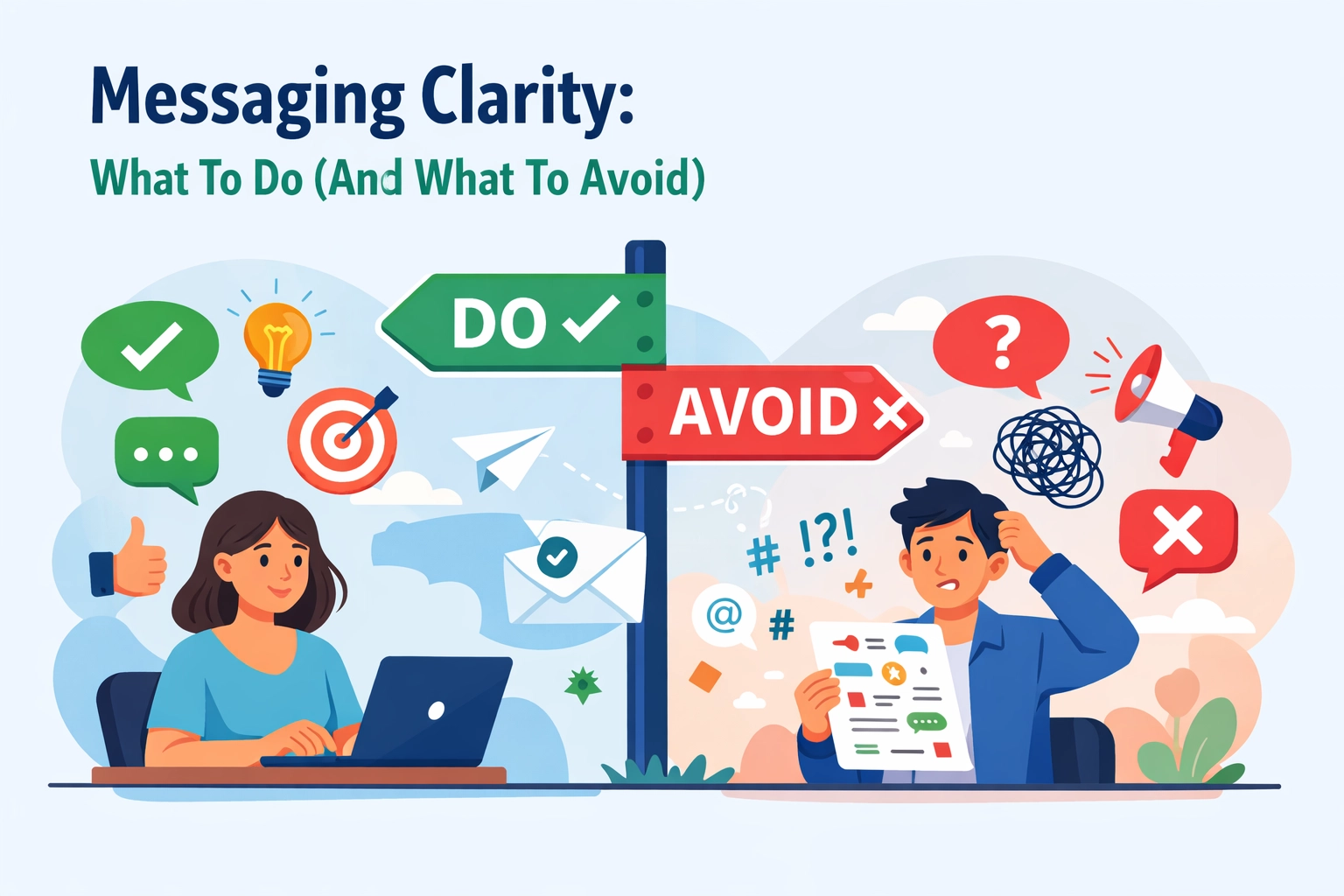
What to Do: Your Clarity Checklist
Know Who You’re Actually Talking To
This sounds obvious, but you’d be surprised how many brands in 2026 are still writing for “everyone.” Spoiler: everyone is no one.
Before you write a single word, ask yourself:
- What does this person already know?
- What do they need to know?
- What language do they actually use?
If you’re explaining digital media services to a 60-year-old business owner, you won’t use the same language as you would with a 25-year-old social media manager. Different people, different contexts, different words.
The golden rule? Write like you’re explaining it to a friend over a pint. If they’d look confused, rewrite it.

Apply the Three Cs — and Actually Mean It
You’ve probably heard this before, but here’s the 2026 version:
Clarity: Say what you mean. Use words people recognise. If you need to explain your explanation, you’ve already lost them.
Conciseness: Cut the fluff. Every sentence should earn its place. If it doesn’t add value, delete it. Attention spans aren’t getting longer — act accordingly.
Consistency: Your tone, your message, your visual style — it all needs to match. If your homepage sounds corporate but your Instagram sounds like a teenager, people won’t trust you. Pick a lane and stay in it. This is where investing in a coherent corporate identity pays dividends.
Structure Your Message Like a Staircase
People don’t read — they scan. So give them something worth scanning.
Start with your most important point. Then the second most important. Then the third. Think of it like building a staircase: each step should naturally lead to the next.
Use short paragraphs. Add bullet points when listing things. Break up dense text with subheadings. Make it visually digestible — not a wall of text that looks like homework.
Test Everything (Yes, Use AI for This)
Here’s where 2026 gets interesting: you can now use AI tools to test whether your messaging actually makes sense before it goes live.
Feed your copy into ChatGPT or Claude and ask:
- “Does this make sense to a 15-year-old?”
- “Simplify this without losing the meaning.”
- “What’s confusing about this paragraph?”
Then test it on real humans. Send it to someone in your target audience and ask them to read it aloud. Where do they stumble? That’s where you need to edit.
If you’re running website marketing campaigns, A/B test your landing page copy. Version A versus Version B. Data doesn’t lie — and small wording changes can have a significant impact on conversion rates.
Zest City’s AI integration services can also help you build smarter content workflows that review and refine your messaging at scale — without losing the human touch.

Build In One Unifying Idea
Every piece of communication should ladder back to one core message — your North Star.
If you’re a recruitment agency, maybe it’s “We find people who actually fit.” If you run virtual events, maybe it’s “Connections without the commute.” Whatever it is, make sure every blog post, every email, every social caption ties back to that central idea.
This isn’t about repetition — it’s about reinforcement. When people encounter the same message delivered in different ways across different channels, it sticks.
What to Avoid: The Clarity Killers
Stop Hiding Behind Jargon
“We leverage synergistic solutions to optimise your digital ecosystem.”
What does that actually mean? Absolutely nothing.
Jargon is what happens when people want to sound clever instead of being understood. And in 2026, when AI can generate perfectly polished corporate-speak at the click of a button, jargon just makes you sound like a bot.
Swap “leverage” for “use.” Replace “optimise” with “improve.” Ditch “ecosystem” entirely. Your audience will thank you for it.
Don’t Contradict Yourself
If your homepage says “We’re all about personal service” but your chatbot gives robotic responses, you’ve got a problem.
If your recruitment emails promise “fast placement” but your website says “thorough vetting takes time,” people will notice — and they’ll lose confidence in you.
Contradictory messaging destroys trust faster than almost anything else. Audit your content regularly. Make sure what you’re saying on LinkedIn matches what you’re saying in your email campaigns and on your website.

Avoid Vague Fluff
“We’re passionate about excellence.”
Brilliant. So is everyone else.
Vague messaging is like white noise — it fills space but communicates nothing. Instead of saying you’re “innovative,” show me what you’ve actually innovated. Instead of claiming you’re “customer-focused,” tell me exactly how you’ve helped a real customer achieve a real result.
Specifics beat generalities every single time. “We reduced recruitment time by 40%” is infinitely more persuasive than “We’re efficient.”
Don’t Overcomplicate the Simple
Long sentences kill clarity. So do dense paragraphs that go on for half a page. And nested clauses that force readers to go back and re-read the beginning of the sentence just to remember what you were talking about in the first place.
See what I did there? Exhausting, isn’t it?
Keep sentences short. Keep paragraphs shorter. If you’re writing for social media marketing, you’ve got even less room to play with — so make every word count.
Stop Using Fifty Words When Five Will Do
Your audience doesn’t care about your word count — they care about getting their answer quickly and confidently.
Before: “In order to facilitate the commencement of your digital transformation journey, we recommend initiating a comprehensive consultation process.”
After: “Let’s start with a chat.”
Same meaning. A fraction of the words. Infinitely more human.
This principle applies everywhere — from your website homepage to your email subject lines to your social bios. Brevity isn’t laziness; it’s respect for your reader’s time.
The Bottom Line on Messaging Clarity
In a world where AI can generate unlimited content, the rarest thing you can offer is genuine clarity. Clear messaging signals confidence. It signals that you understand your audience. And it signals that you respect their time enough not to waste it.
Whether you’re crafting a landing page, writing a recruitment brief, or scripting a webinar intro, the question is always the same: is this the clearest possible way to say this?
If you’re not sure, it probably isn’t.
At Zest City, we help UK businesses sharpen their digital presence — from the words on your website to the way your brand communicates across every channel. If your messaging needs a health check, claim your free digital audit and we’ll tell you exactly where you stand.
Frequently Asked Questions: Messaging Clarity
What is messaging clarity and why does it matter?
Messaging clarity means communicating your ideas in a way that is immediately understood by your intended audience — without jargon, ambiguity, or unnecessary complexity. It matters because unclear messaging costs businesses leads, sales, and trust. In 2026, with AI-generated content flooding every channel, clarity is one of the few things that genuinely differentiates a brand.
What are the three Cs of clear messaging?
The three Cs of clear messaging are Clarity, Conciseness, and Consistency. Clarity means saying exactly what you mean in words your audience recognises. Conciseness means cutting anything that doesn’t add value. Consistency means ensuring your tone, vocabulary, and core message align across every channel — from your website to your social media to your email campaigns.
How do you test whether your messaging is clear enough?
There are two effective approaches. First, use AI tools like ChatGPT or Claude to stress-test your copy — ask them to simplify a paragraph or identify what’s confusing. Second, test with real people from your target audience: ask them to read your copy aloud and note where they stumble or hesitate. For website landing pages, A/B testing different versions of your copy against conversion data is the most reliable method.
What’s the difference between vague messaging and specific messaging?
Vague messaging relies on empty claims — phrases like “passionate about excellence” or “innovative solutions” that could apply to any business. Specific messaging uses concrete details — numbers, outcomes, named processes — that demonstrate your actual value. For example, “We reduced our client’s recruitment time by 40%” is specific and credible; “We’re efficient” is not. Specifics build trust; generalities erode it.
How does messaging consistency affect brand trust?
When your messaging is inconsistent — for example, your website sounds formal but your social media sounds casual, or you promise speed in one place and thoroughness in another — audiences notice the contradiction and lose confidence in you. Consistent messaging across all touchpoints reinforces your core message, builds familiarity, and signals professionalism. Investing in a clearly defined corporate identity is one of the most effective ways to enforce consistency at scale.
How can AI help improve messaging clarity?
AI tools can serve as a first-pass editor, simplifying complex sentences, flagging jargon, and suggesting clearer alternatives. They’re also useful for checking whether your message lands as intended for different audience types. However, AI works best as a tool to support human judgement — not replace it. Zest City’s AI integration services help businesses build content workflows that combine AI efficiency with human editorial oversight.
Does messaging clarity matter for SEO and AI search engines?
Yes — significantly. Search engines, including AI-powered engines like Google’s Search Generative Experience, reward content that directly and clearly answers user queries. Clear, well-structured content with logical headings, concise paragraphs, and specific answers is more likely to be featured in AI-generated responses and Google’s featured snippets. Messaging clarity is therefore both a brand communication strategy and an SEO strategy.
Ready to make your messaging work harder? Zest City offers a