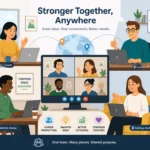
In a world increasingly shaped by artificial intelligence, the spotlight is finally shifting towards inclusion. AI and accessibility are no longer separate conversations. They are becoming two sides of the same coin.
Whether you’re a web developer, HR manager, digital event organiser, or job seeker, accessibility is more than a compliance box. It’s a strategic, human-first decision.
As Paul Boag once said, “Accessibility is not about making things easier for disabled people. It’s about making things better for everyone.”
At Zest City, we believe digital spaces should serve everyone. Here’s how AI is helping create a more inclusive digital world—and how you can play your part.
How Does Artificial Intelligence Help Improve Accessibility?
Artificial intelligence is redefining what’s possible for digital inclusion. Here’s how AI improves accessibility across platforms, industries and user needs:
1. Real-time Language Translation and Captioning
AI-powered tools like Google Live Transcribe and Microsoft Teams’ real-time captioning allow instant translation and subtitling for video calls, webinars and virtual events.
This isn’t just helpful for the deaf or hard-of-hearing—it benefits non-native speakers, noisy environments, and neurodiverse users too.
Learn more in our related post on Accessibility in Webinars: Ensuring Inclusivity for All Participants.
2. Screen Reader Improvements with AI Voice Recognition
Traditional screen readers can struggle with context. AI-driven screen readers like Voice Dream Reader or Microsoft’s Seeing AI use natural language processing (NLP) to:
- Detect tone and emotion
- Understand contextual meaning
- Describe images more accurately
3. Predictive Text and Smart Typing
Smartphones and laptops now offer AI-powered predictive text and autocorrect that assist users with dyslexia, mobility challenges, or learning disabilities.
In the world of digital events, this means smoother Q&A sessions, easier engagement and more inclusive participation.
4. AI Vision Technology
AI can identify objects, text and people in real time—helping visually impaired users interpret images, navigate spaces or read signs. Apps like Be My Eyes and Seeing AI are leading the charge here.
“Technology by itself doesn’t make leaders. But leaders who use technology well? They change the world.”
— Sheryl Sandberg
Using AI to Solve Real-World Problems and Improve Society
Accessibility is one of many ways AI is driving societal improvement. But to truly serve everyone, we must design tech that reflects real human diversity.
Consider these use cases:
- Hiring platforms using AI to remove bias from CV screening, enabling fairer recruitment
- AI-powered prosthetics and exoskeletons improving mobility for disabled individuals
- Chatbots with mental health support offering 24/7 accessible care
- Digital event tools that personalise experiences based on user profiles, engagement history, or assistive needs
Explore our insights on The Role of Chatbots in Virtual Event Assistance and Engagement to see how AI enhances event accessibility.
We’re witnessing a shift from “tech for some” to “tech for all.” The opportunities for inclusive AI design are only growing.
Making AI More Accessible to Everyone
Creating an inclusive AI ecosystem means ensuring that access to AI is itself inclusive.
How do we make AI tools more accessible?
🧠 Simplify the user interface
Design clean, intuitive interfaces that work for screen readers, keyboard navigation, and voice commands.
📚 Offer multi-language and visual-based training
User guides should include images, videos, and translations to serve a wider audience.
🌍 Use cloud-based AI solutions
Low-cost, scalable tools like Google’s AI Hub or Microsoft’s Azure AI can help small businesses and schools adopt inclusive tools without major infrastructure.
👨👩👧👦 Involve diverse users in product design
If your test audience doesn’t reflect diverse needs, your AI won’t either. Co-create with the people it’s designed to help.
As Scott Whitehead puts it:
“Discoverability and accessibility aren’t luck—they’re the result of conscious decisions and deep respect for the user.”
AI and the Inclusive Workplace: What’s Next?
AI isn’t just reshaping products. It’s reshaping workplaces.
How does AI contribute to a more inclusive and varied work environment?
- AI talent platforms identify candidates based on skills rather than background or geography
- Virtual assistants and automation tools support neurodivergent workers with task management
- Adaptive learning systems tailor onboarding and training to different learning styles
- Speech-to-text and text-to-speech AI enables smoother communication for those with hearing or speech differences
AI empowers people who’ve been historically excluded to fully participate in the workforce. This opens new doors for remote workers, disabled professionals, neurodiverse creatives and many more.
“The measure of a society is how it treats its most vulnerable. AI gives us a new opportunity to raise that bar.”
— Daniel Pink
We’re already seeing these changes in the digital event sector. From virtual audience support to inclusive speaker tools, AI is reshaping how we build digital spaces that welcome everyone.
Your Accessibility Action Plan
Use this checklist to audit your current strategy and spot areas for improvement:
✅ AI Accessibility Checklist
- Are your websites and digital platforms screen-reader compatible?
- Do your webinars offer real-time captions and translations?
- Are your apps voice-controlled or gesture-responsive?
- Have you involved users with disabilities in your AI product testing?
- Are your hiring tools removing or reinforcing bias?
- Can users adjust font size, colour contrast and interface layout easily?
- Is your chatbot or customer support AI inclusive by design?
If you ticked fewer than 5, it’s time to refresh your approach.
Final Thoughts: Designing for Equity, Not Just Efficiency
We talk a lot about efficiency in tech.
But efficiency without equity is just speed without purpose.
As we integrate AI deeper into how we communicate, work, and connect, let’s commit to making that integration inclusive.
Whether you’re creating an event, building a site, hiring talent, or launching an app—accessibility should lead, not follow.
Need help reviewing your accessibility setup or finding digital event staff who understand inclusive design? Contact us at Zest City or explore our digital media and recruitment services.
Relevant reading: