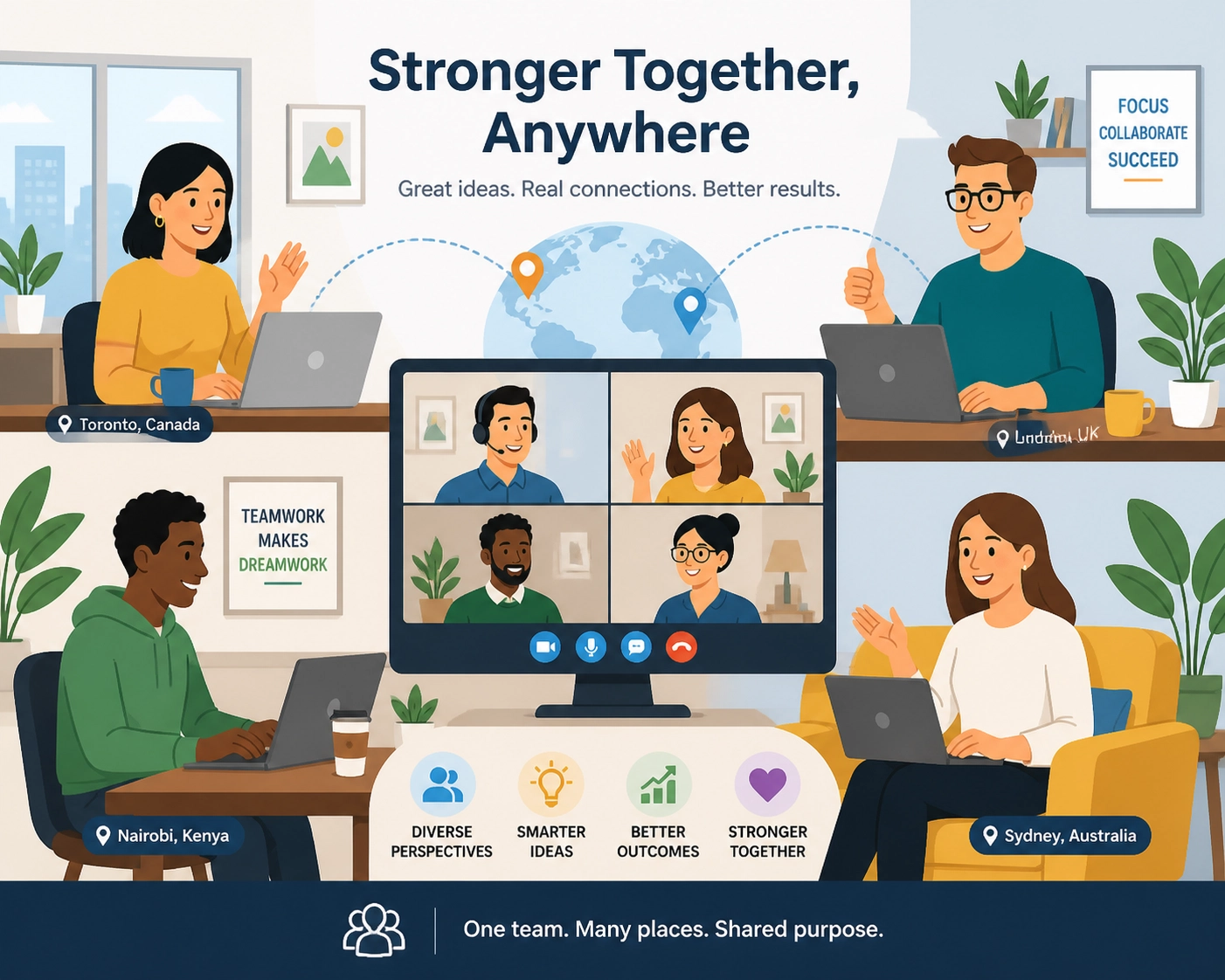
Let’s be honest: keeping a remote team motivated, engaged, and loyal in 2026 is vastly different from how things operated even a few years ago.
Back then, offering remote work was a shiny perk that practically sold itself. Today? Flexibility is the absolute baseline expectation. Employees across the UK and beyond demand it, and top talent simply will not settle for rigid, office-bound mandates.
However, as remote and hybrid models have matured, a new challenge has taken centre stage: retention risk driven by disconnection, burnout, and unclear expectations. When your team is scattered across different postcodes, time zones, and home offices, traditional office culture doesn’t cut it anymore. You cannot rely on spontaneous hallway chats or free office snacks to build genuine camaraderie.
If you want to build a remote team that stays for the long haul, you need a deliberate, systemised approach to motivation and engagement. In this comprehensive guide, Zest City — a UK digital agency specialising in digital staffing, recruitment, and online business growth — breaks down the exact strategies, trends, and frameworks that forward-thinking organisations are using in 2026 to keep their distributed teams thriving.
1. The 2026 Remote Work Landscape: What Has Changed?
Before you can fix retention, you need to understand the modern mindset of remote professionals. Research heading into 2026 highlights several undeniable shifts:
- Flexibility is non-negotiable: Over 95% of knowledge workers expect remote or hybrid flexibility as a permanent career fixture. Removing it is the fastest route to high turnover.
- Culture is the number one retention driver: Remote culture has surpassed compensation as the leading driver of voluntary turnover in distributed organisations. When employees feel isolated, pay rises alone won’t stop them from looking elsewhere.
- The burnout epidemic continues: Fully remote professionals frequently report difficulty unplugging and establishing healthy boundaries. Without clear guardrails, flexibility quickly morphs into an “always-on” trap.
- Outcome-based work over activity tracking: Progressive companies have abandoned surveillance software in favour of transparent, outcome-driven performance metrics that respect employee autonomy.
Understanding these shifts allows forward-thinking leaders to adapt their management approach before valuable team members hand in their notice.

2. Identifying the Root Causes of Remote Disengagement
Why do good people leave remote teams? Usually, it isn’t because they dislike working from home. It is because of systemic friction points that drain their motivation over time.
Isolation and Weak Belonging
When you never see colleagues face-to-face, it is easy to feel like an isolated cog in a machine rather than a valued team member. Surveys consistently show that nearly a quarter of remote staff report regular feelings of professional loneliness — a figure that has remained stubbornly high despite the normalisation of distributed working.
Ambiguous Expectations
In a physical office, managers can gauge progress through informal observation. In a remote environment, poor communication creates dangerous ambiguity. When employees don’t know exactly what success looks like, anxiety creeps in, motivation plummets, and engagement hits rock bottom. Clear, documented role expectations are not a nice-to-have — they are a retention essential.
Superficial Perks vs. Genuine Support
Gimmicky virtual happy hours and generic digital gift cards no longer sustain morale. Employees want meaningful professional growth, psychological safety, and leaders who genuinely respect their personal boundaries. The organisations winning the retention battle are those treating their people as whole human beings, not productivity units.
3. The Blueprint for Motivating and Retaining Remote Teams
Building a resilient remote workforce requires a deliberate shift in operational philosophy. Here is how to create an environment where top-tier talent actually wants to stay.
Shift from Hours Logged to Outcomes Achieved
Micromanagement is the ultimate motivation killer. When you judge team members by how many hours they appear “active” on chat applications rather than the quality of work they produce, you breed resentment and mistrust.
Instead, clearly document what “great” looks like for every single role. Define deliverables, set transparent milestones, and give your people the autonomy to execute tasks on their own schedule. When professionals have genuine ownership over their workflow, intrinsic motivation follows naturally.
Embrace an Async-First Operating Model
Constant meetings destroy deep work and accelerate burnout. Leading remote organisations are moving deliberately toward asynchronous-first communication:
- Reserve live video calls strictly for collaborative problem-solving, strategic debates, and genuine team bonding moments.
- Handle routine status updates, project briefings, and internal brainstorms through well-documented written channels.
This approach respects different time zones, reduces meeting fatigue, and gives remote staff the uninterrupted focus time they need to do their best work.
Invest in Intentional Connection and In-Person Touchpoints
Remote culture doesn’t happen by accident; it requires deliberate architecture. High-performing distributed teams invest heavily in regular, meaningful touchpoints.
Crucially, bringing distributed teams together for in-person retreats or collaborative workshops once or twice a year produces significant cultural dividends. Research consistently shows that teams which gather periodically report higher psychological safety and trust than those that never meet in person.
Additionally, managers should prioritise authentic, informal check-ins. A brief message asking how someone is really doing — without immediately pivoting to task lists — goes a long way towards building lasting loyalty.

4. Upskilling, Digital Enablement, and Scaling Your Team Right
Retention is deeply intertwined with professional growth. With foundational skill sets evolving rapidly — particularly in AI, digital marketing, and virtual event production — employees want to know that their employer is genuinely invested in their future.
Build a Skills-Based Culture
Provide continuous learning opportunities, internal mobility pathways, and stretch projects that align with your team’s career aspirations. When employees can see a clear route to promotion and skill acquisition within your organisation, they have far less reason to look elsewhere. Skills-based organisations consistently outperform their peers on both retention and productivity metrics.
Streamline Your Digital Infrastructure
Frustrating tech stacks, clunky internal tools, and fragmented communication channels create daily friction that quietly erodes employee morale. Ensuring your team has top-tier digital tools, robust platforms, and reliable systems makes their day-to-day work noticeably easier and more satisfying.
Whether you are scaling your internal capabilities or building client-facing online platforms, having the right digital foundation underpins everything. If your web infrastructure needs strengthening to support a growing remote team, Zest City’s digital media services and professional website design services are built to help UK businesses operate with confidence online.
Leverage AI to Reduce Administrative Burden
One of the most underrated retention strategies in 2026 is reducing the volume of low-value administrative work that quietly exhausts remote staff. Intelligent automation — from AI-assisted scheduling to automated reporting workflows — frees your team to focus on the high-impact, high-satisfaction work that keeps them engaged. Zest City’s AI integration services help UK businesses implement practical automation that genuinely improves the day-to-day experience for distributed teams.
5. Getting Recruitment Right: Retention Starts at Hiring
Retaining top talent frequently starts with acquiring the right people in the first place. Hiring individuals who are genuinely suited to remote and distributed working — rather than those who struggle without close in-office supervision — dramatically improves long-term retention rates.
Zest City, a UK digital agency and specialist recruiter for the digital events industry, sources permanent, contract, and fixed-term professionals who are vetted not just for technical skills but for the behaviours and mindset that make remote teams thrive. Whether you need to strengthen your team on a permanent basis or bring in specialist support for a defined period, getting this hiring decision right from the outset pays significant dividends.
- For permanent remote hires, explore Zest City’s permanent placement services for the digital events industry.
- For flexible, short-term resourcing, Zest City offers specialist temporary staffing for digital event teams.
- For project-based engagements, consider Zest City’s fixed-term contractor services — ideal for scaling quickly without long-term overhead.
When the people you bring in are inherently well-suited to distributed working, your retention strategy becomes significantly easier to execute.
6. Measuring What Matters: Retention Metrics for Remote Teams
You cannot improve what you do not measure. The most effective remote organisations track a specific set of engagement and retention indicators:
- Employee Net Promoter Score (eNPS): How likely are your team members to recommend your organisation as a great place to work? Track this quarterly.
- Voluntary turnover rate: Monitor your rolling 12-month voluntary attrition. Industry benchmarks vary, but any sustained increase warrants immediate investigation.
- Time-to-productivity for new hires: Slow onboarding kills early engagement. Track how quickly new remote starters reach full productivity — and act swiftly if the process is dragging.
- Manager effectiveness scores: Direct line managers are the single biggest influence on remote employee experience. Regular upward feedback is non-negotiable.
- Pulse survey participation rates: Low response rates to internal surveys are themselves a warning signal of disengagement.
Review these metrics consistently and use them to drive concrete, visible action. Employees who see their feedback translated into change quickly learn that their voice genuinely matters — and that alone meaningfully improves loyalty.
Ready to Build a Remote Team That Actually Stays?
Whether you are looking to strengthen your existing distributed workforce or source the specialist digital talent needed to grow, Zest City is here to help. As a UK digital agency with deep expertise in digital event staffing and recruitment, we understand exactly what it takes to build remote teams that perform and persist.
Explore our recruitment and staffing services for employers — or get in touch with our team to discuss your specific remote workforce challenges today.
Frequently Asked Questions: Staff Motivation and Retention for Remote Teams
What is the biggest cause of remote employee turnover in 2026?
Research heading into 2026 consistently identifies poor remote culture and feelings of isolation as the leading drivers of voluntary turnover in distributed teams — ahead of compensation. When remote employees feel disconnected from their colleagues and unclear about expectations, they disengage quickly. Building intentional connection, clear communication structures, and genuine professional development pathways are the most effective countermeasures.
How can managers motivate remote employees without micromanaging?
The most effective approach is to shift from activity-based management (monitoring hours online) to outcome-based management (measuring results against clear, agreed deliverables). Give team members autonomy over how and when they work, provide regular constructive feedback, and invest in authentic one-to-one check-ins that go beyond task lists. Autonomy combined with clear expectations is a powerful intrinsic motivator.
Does remote working cause more burnout than office working?
It can, if not managed proactively. The key risk factors are blurred work-life boundaries, an “always-on” communication culture, and insufficient structured downtime. Organisations that implement async-first communication models, set clear response-time norms, and actively encourage employees to switch off outside working hours report significantly lower burnout rates than those that simply transplant office culture into a remote setting.
What digital tools help retain and motivate remote teams?
The most impactful tools are those that reduce friction rather than add complexity. Robust project management platforms (such as Asana, Monday.com, or Notion), reliable video conferencing tools, async-friendly documentation systems, and well-integrated communication channels all contribute to a smoother remote working experience. Equally important is ensuring your broader digital infrastructure — including websites, internal platforms, and automation workflows — supports rather than hinders your team.