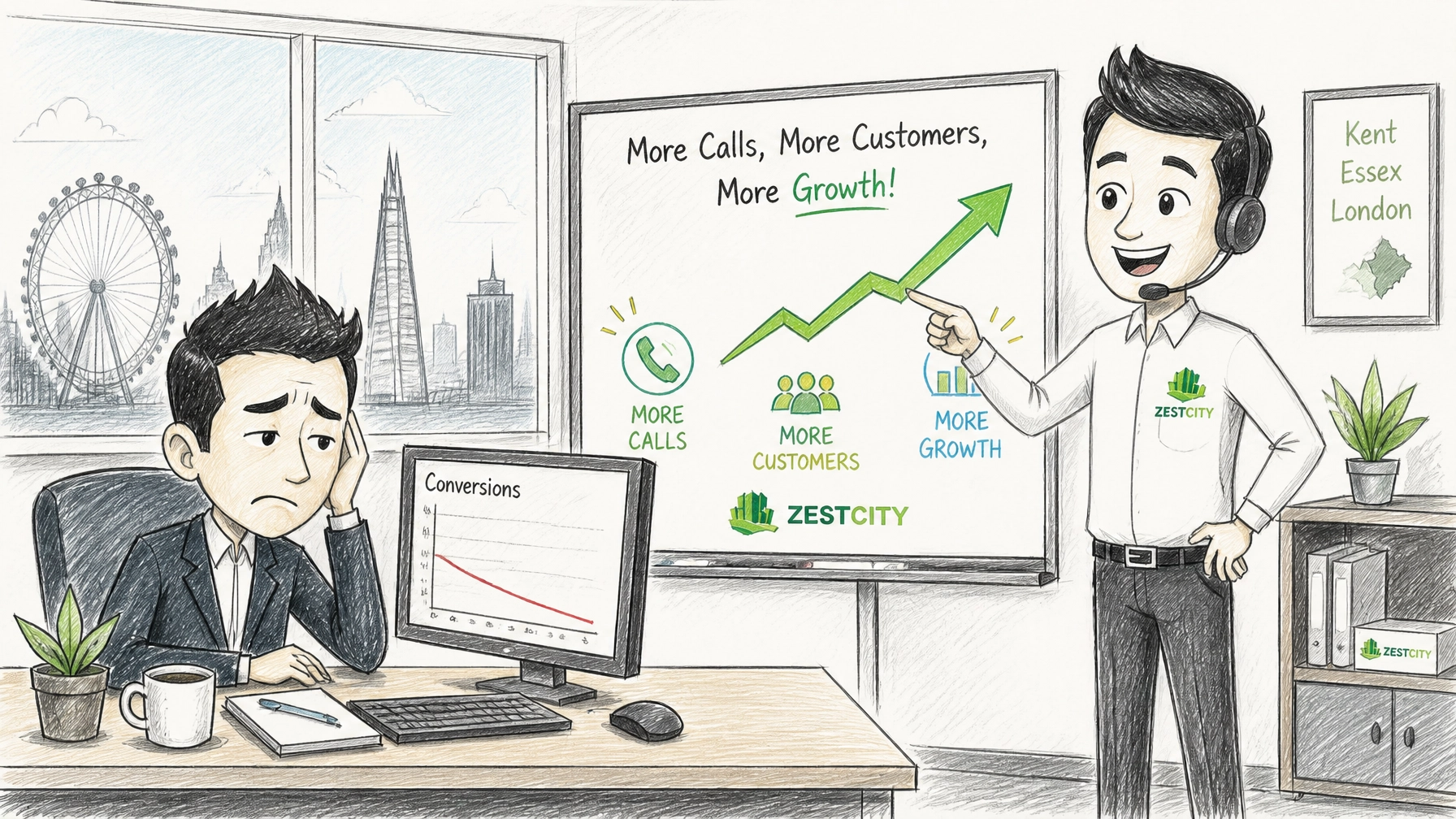
It’s 2026. You’ve spent a fortune on ads. You’ve churned out blog posts like a content mill on overdrive. You’re seeing traffic — maybe even a lot of it — streaming in from Dartford, Chelmsford, and the heart of London.
But your inbox is as quiet as a library on a Sunday morning. No leads. No “let’s talk” emails. Just crickets.
If your website marketing strategy feels like it’s shouting into a void, you aren’t alone. The digital landscape has shifted dramatically. What worked in 2024 is now ancient history. Today, conversion isn’t just about being seen — it’s about being trusted and relevant in a world flooded by AI-generated noise.
Zest City is a UK digital agency based in Kent and Essex, with over 20 years’ experience helping businesses across the South East — and beyond — turn anonymous traffic into genuine enquiries. We’ve watched the web evolve through every major shift, and we’ve seen the same “traffic-but-no-leads” paradox trip up businesses time and again. Here are the ten most common reasons your strategy is failing — and, more importantly, how to fix each one fast.
1. You’re Winning the Traffic War but Losing the Intent Battle
Most website marketing techniques focus on volume. “Get 10,000 hits a month!” sounds impressive on a report, but if 9,999 of those visitors are information-seekers who just want a free template, your conversion rate will stubbornly stay at zero.
In 2026, Google’s Search Generative Experience (SGE) and rival AI search tools handle the simple “how-to” queries directly on the results page. If you’re only ranking for basic informational terms, users get their answer without ever clicking through to your site.
The Fix: Pivot to high-intent keywords. Instead of targeting “what is web design,” go after phrases like “best website design services for recruitment firms in Kent.” You want the visitor who is ready to buy, not the person doing a school project.
2. Your Local SEO is Accidentally Global
If you serve London, Essex, and Kent, why does your website look as though it could be based in Ohio? If a business owner in Maidstone or Brentwood doesn’t immediately see evidence that you understand their area, they’ll bounce — fast.

The Fix: Build dedicated location pages for each area you serve. Stop competing globally for “digital marketing” and start winning locally for “marketing agency in Chelmsford” or “web design studio in Gravesend.” Use local landmarks, regional case studies, and verified local reviews. Our website marketing services are specifically tailored to help South East businesses dominate their local search results.
3. The Scientific Friction of Your UX
We call it scientific friction because the damage can be measured precisely: even a 0.5-second page delay or a single unnecessary form field translates directly into lost revenue. If your site feels like a maze, visitors will leave before they ever see your offer.
The Fix: Simplify every path to conversion.
- Audit your forms: Do you genuinely need their phone number, company size, and their LinkedIn URL? Probably not. Remove everything that isn’t essential.
- One primary CTA per page: Don’t ask visitors to sign up for a newsletter, download a PDF, and book a call simultaneously. Pick one goal per page and design ruthlessly toward it.
- Check your tap targets: Every button must be large enough for a thumb to hit comfortably on a smartphone screen.
4. You’re Still Doing Old SEO Instead of GEO
If you aren’t optimising for Generative Engine Optimisation (GEO), you are effectively invisible to AI assistants — the same assistants that an increasing proportion of your potential customers now use to find suppliers. Modern search engines prioritise “evidence-dense” content that answers specific questions directly and authoritatively.
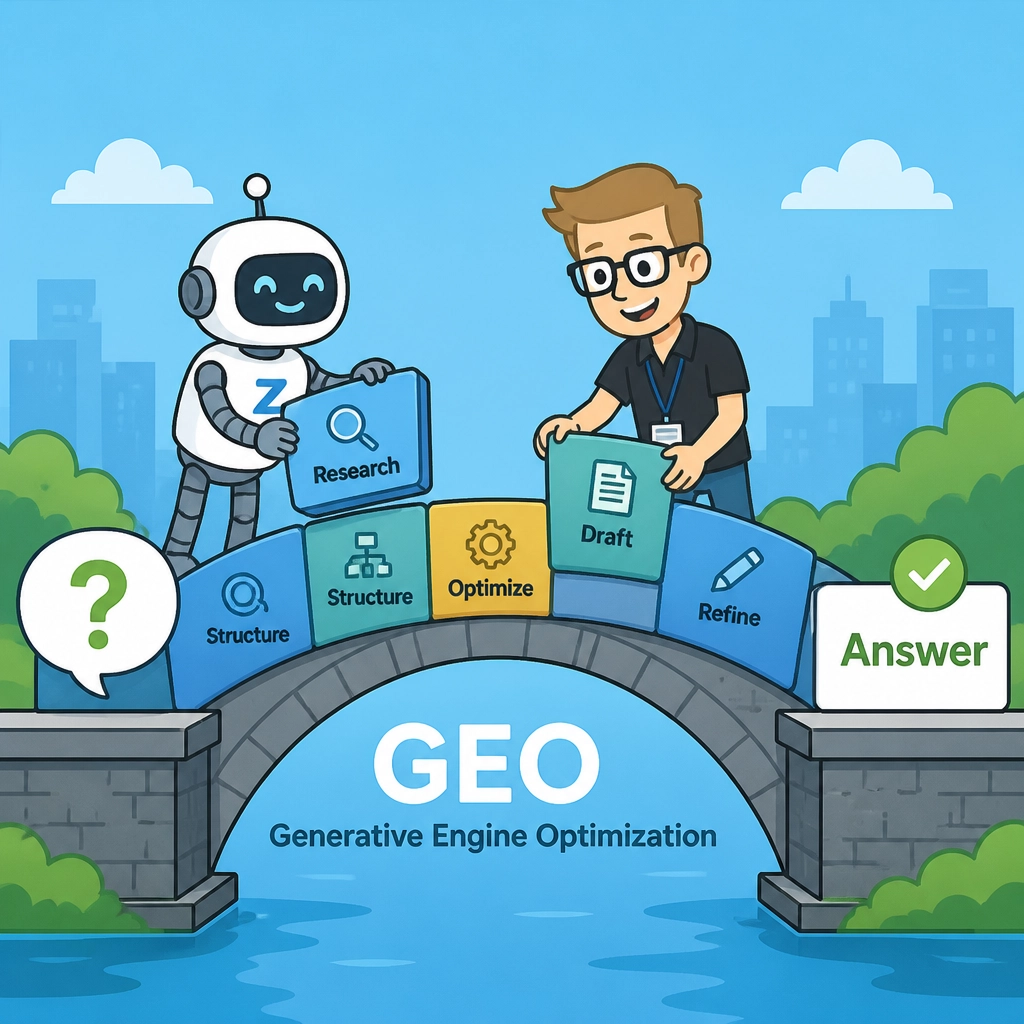
The Fix: Structure your content so that AI engines can extract and cite it confidently. Use H2 and H3 headings phrased as direct questions. Include tables, bullet points, statistics, and clear expert conclusions. Make every page a self-contained, citable authority on its topic.
2026 Conversion Impact: Key Factors at a Glance
| Factor | Impact on Conversion | Why It Matters in 2026 |
|---|---|---|
| Site Speed | −7% per additional second | Instant gratification is now the baseline expectation. |
| Mobile UX | 62% of leads originate on mobile | London commuters and travelling professionals browse on the go. |
| Local Social Proof | +35% uplift in trust signals | Authentic local credentials outperform generic AI-generated copy. |
| Single Clear CTA | Up to +200% click-through rate | Visitors need a guided path, not a menu of choices. |
5. You Haven’t Built a Trust Shield
Audiences in 2026 are understandably sceptical. They’ve been burned by deepfakes, AI-generated “expert” advice, and faceless brands that disappear after taking their money. If your website doesn’t clearly signal “real people, real expertise, real results,” visitors simply won’t convert.

The Fix: Lead with evidence. Showcase real-world results in your case studies. Include video testimonials, verified Google reviews, and photographs of your actual team. At Zest City, our 20+ years of documented client results provide the kind of credibility that no AI tool can fabricate — and it shows in our enquiry rates.
6. Your Content is AI Noise
If a language model could have written your blog post in three seconds flat, why should a human spend three minutes reading it? Generic, recycled content doesn’t build authority — it just fills server space and trains visitors to expect nothing interesting from you.
The Fix: Infuse every piece of content with a perspective that only you can offer. Share a genuinely controversial opinion about your industry. Publish proprietary data from your own client work. Give readers a “behind-the-scenes” view of a real project you’ve delivered in London, Kent, or Essex. Original thinking is now the scarcest commodity on the web — and therefore the most valuable.
7. Mobile-First Has Become Mobile-Only
The industry has been urging “mobile-friendly” for a decade. In 2026, that bar no longer exists — the bar is now mobile-perfect. For clients in the London commuter belt, reaching customers on the underground or between meetings on a 5-inch screen isn’t an edge case; it’s the primary use case.
The Fix: Test your site on every device imaginable, including older handsets and tablets. If the “Close” button on your pop-up requires a precisely aimed fingernail to tap, you’ve just lost a lead. Engage a professional team to audit your website design for mobile performance — small tweaks here can produce outsized gains in conversion.
8. You’re Missing the Hyper-Local Connection
Many Essex and Kent businesses try to sound “corporate” and “national” — but their genuine competitive advantage is being local. Prospects in Basildon or Tunbridge Wells often prefer to work with someone who knows their high street, understands the regional business climate, and can meet them face to face.

The Fix: Own your local identity. Reference specific towns, local business communities, and regional success stories. Consider whether your corporate identity reflects a brand people in your area would be proud to be associated with. “Local” is not a limitation — in 2026, it is a strategic moat.
9. You’re Not Nurturing — You’re Abandoning
Most websites are built for the first visit. They present a pitch, ask for a sale, and then do absolutely nothing when a visitor leaves without converting. Given that the average B2B buyer visits a supplier’s website seven or more times before making contact, this is a catastrophic oversight.
The Fix: Build a nurture journey. Retargeting ads, email sequences triggered by page visits, and LinkedIn follow-up campaigns all serve to keep your brand visible during the long consideration phase. Pair this with consistent social media marketing so that every touchpoint reinforces the same message of expertise and reliability.
10. You Haven’t Tested Anything — Ever
Perhaps the most common and most fixable reason for low conversion rates is also the least glamorous: a complete absence of structured testing. Many businesses launch a website and simply hope it works, never running a single A/B test on their headline, button colour, or form length.
The Fix: Make testing a permanent habit, not a one-off project. Test one variable at a time — your headline, your CTA copy, your hero image — and let data, not instinct, guide your decisions. Even simple tools like Google Optimize or Hotjar heatmaps can reveal conversion killers that are otherwise invisible.
Ready to Stop Guessing and Start Converting?
Zest City, a UK digital agency specialising in website marketing, SEO, and conversion optimisation for businesses in Kent, Essex, and London, offers a no-obligation free digital audit that identifies exactly which of the above issues is costing you leads right now.
Claim Your Free Digital Audit →
Or, if you’d prefer to explore how we approach website marketing strategy in detail, visit our website marketing services page