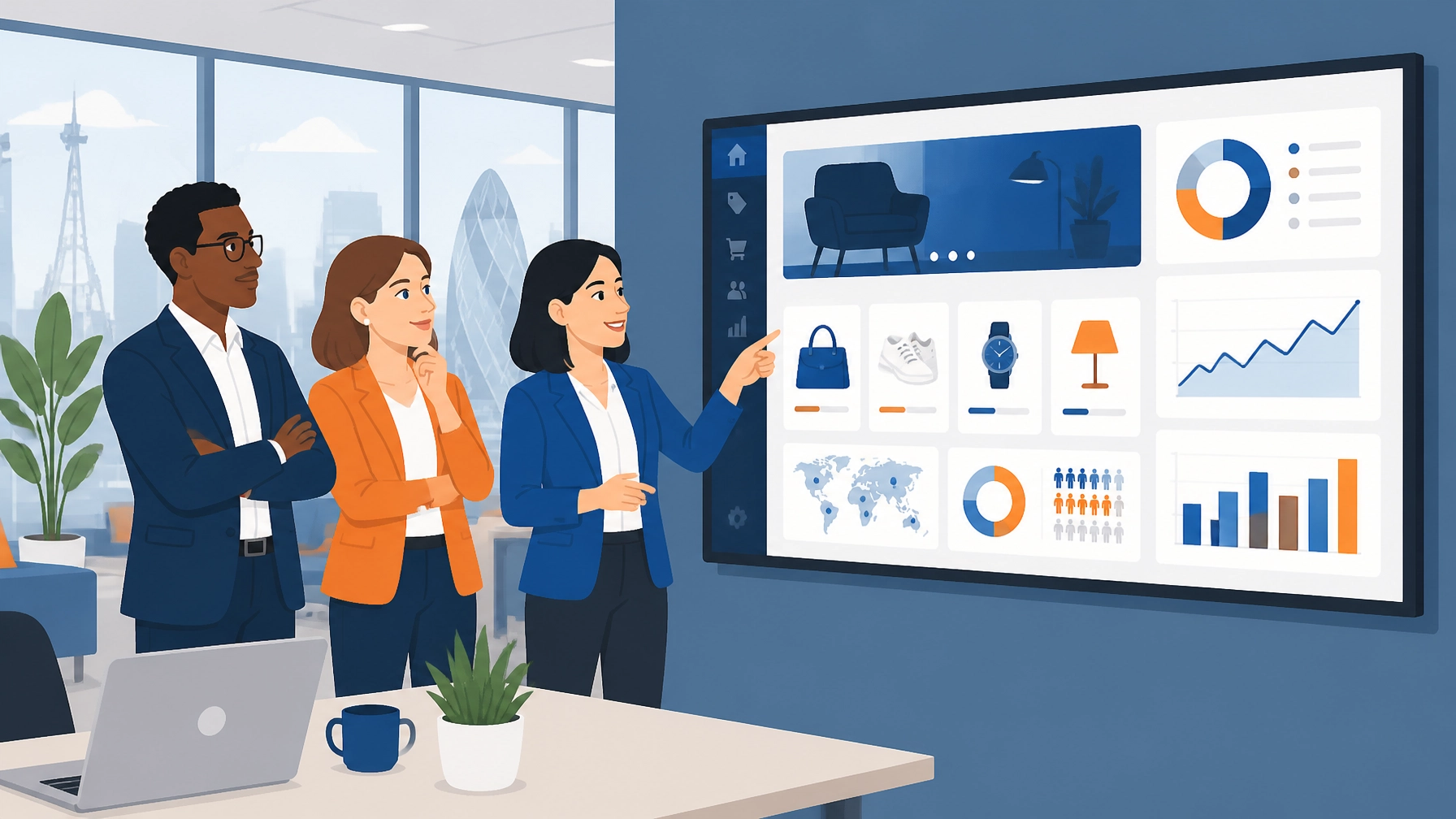
Here is a hard truth for 2026: the “cookie-cutter” era of ecommerce is over.
If you are a UK small-to-medium enterprise (SME) in Kent, Essex, or London, you have likely felt the pressure. You launched a site on a standard template a few years back. It worked. But now? It feels slow. It looks like everyone else’s. And most importantly, it is not converting like it used to.
In 2026, the digital landscape has shifted significantly. Shoppers are more demanding, AI is more deeply integrated into the buying journey, and legal requirements around accessibility are stricter than ever. Zest City, a UK digital agency specialising in custom ecommerce web design for SMEs across Kent, Essex, and London, works with businesses every week who are making this exact transition — and the results speak for themselves.
In this guide, we will show you exactly why UK businesses are ditching off-the-shelf templates in favour of bespoke ecommerce website builds — drawing on real-world trends, performance data, and practical advice for making the switch.
Why is custom ecommerce web design better than templates in 2026?
Custom ecommerce web design provides a measurable speed advantage over templates, full compliance with the 2026 European Accessibility Act, and the ability to integrate deep AI personalisation that can boost engagement by up to 45%. Unlike templates, custom builds eliminate technical bloat, allowing for stronger SEO rankings and a unique brand identity that no off-the-shelf theme can replicate.
1. The Death of the Generic Storefront
Customers can spot a template from a mile away. In a world where trust is the primary currency online, looking like a carbon copy of your competitor is a recipe for high bounce rates and low conversions.
In 2026, we are seeing the rise of what designers are calling Warm Minimalism — a philosophy built around organic shapes, bespoke micro-interactions, and layouts that feel genuinely human. Templates are inherently rigid. They force your brand into a predefined box. A custom solution allows your brand identity to breathe, evolve, and build real loyalty with customers.
If your visual identity feels inconsistent across your digital channels, it may be worth reviewing your corporate identity alongside your ecommerce redesign — the two work best when developed together.

2. Speed is No Longer Optional — It is a Ranking Factor
Google’s algorithms in 2026 are ruthless when it comes to Core Web Vitals. Page speed is not a nice-to-have; it is a direct determinant of where you appear in search results.
Data consistently shows that lean, custom-coded layouts load approximately 1.8 seconds faster than maximalist template designs. Why? Because templates arrive pre-loaded with features you will never use. This code bloat slows your site, frustrates users, and damages your mobile rankings — three problems that compound each other rapidly.
For businesses in competitive local markets like London, Kent, or Essex, that 1.8-second difference is often the difference between a completed sale and a lost lead. If you are unsure how your current site performs, you can request a free digital audit from Zest City — we will benchmark your speed, SEO, and accessibility in a single report, at no cost.
3. The 2026 Accessibility Mandate
This is perhaps the single most significant compliance shift of the decade. As of 2026, the European Accessibility Act — alongside corresponding UK standards — has made inclusive web design a legal necessity, not a best-practice recommendation.
Many older templates simply were not built for modern accessibility requirements, including:
- Advanced keyboard navigation across all interactive elements.
- Comprehensive screen-reader support and semantic HTML structure.
- Dynamic ARIA labels for live content and interactive components.
- Sufficient colour contrast ratios and scalable typography.
A custom build allows you to engineer accessibility into the very DNA of your site from day one. This is not merely about avoiding regulatory fines — it is about opening your digital doors to the approximately 20% of the UK population who live with a disability or accessibility need. In 2026, inclusive design is a substantial competitive advantage, not a compliance box to tick.
Custom vs. Template: The 2026 Comparison
| Feature | Template-Based Store | Custom Bespoke Build |
|---|---|---|
| Average Load Speed | 3.5 – 5.0 seconds | 1.2 – 2.2 seconds |
| SEO Control | Limited by platform/theme | Total control over structured data |
| AI Personalisation | Basic (via third-party apps) | Deep, integrated AI logic |
| Scalability | Harder as you grow | Built to grow with your ERP and logistics |
| Unique Brand Identity | Low (shared layouts) | High (fully unique) |
| Legal Compliance | Dependent on theme updates | Built-in by design |
| Accessibility (EAA 2026) | Often non-compliant | Engineered to WCAG 2.2 AA standard |
4. AI-Driven Personalisation
In 2026, shoppers do not want to browse aimlessly — they want to be guided directly to what they need. AI-powered personalisation is the mechanism that makes this possible at scale.
Custom builds allow for deep AI integration that goes far beyond simple “customers also bought” recommendations. We are talking about layouts that adapt dynamically based on user intent, geographic location (ideal for targeting customers differently in Kent versus London), purchase history, and real-time browsing behaviour.
Research indicates that well-implemented AI personalisation can:
- Increase user engagement by up to 45%.
- Boost average session duration by 38%.
- Improve checkout completion rates significantly by reducing decision fatigue.
When you own the codebase, you own the data architecture. This unlocks the ability for your digital marketing strategy to become genuinely hyper-targeted — something that simply is not possible within the constraints of a shared template platform.

5. Mobile-First is the Only Viable Approach
By mid-2026, over 80% of UK ecommerce transactions are occurring on mobile devices. This is not a trend — it is the baseline reality of how British consumers shop online.
Templates often claim to be “responsive,” but in practice, responsiveness usually means little more than “it shrinks to fit.” That is not the same as being designed for mobile from the ground up. A genuine mobile-first philosophy means designing for the thumb first, then scaling up to desktop — ensuring that your checkout flow is frictionless, your product imagery is optimised for smaller screens, and critical calls to action such as “Add to Basket” are positioned exactly where they need to be for maximum conversion.
6. Real-World Integration: Connecting Your Ecommerce to Your Operations
For most UK SMEs, ecommerce does not exist in isolation. You may have a physical warehouse in Essex, a CRM managing thousands of customer relationships, or a logistics partner with a bespoke API. Template platforms require expensive monthly plugins — or outright hacks — to bridge these gaps. Custom solutions are engineered to connect seamlessly with your:
- Inventory management and ERP systems.
- Customer Relationship Management (CRM) platforms.
- Custom logistics, fulfilment, and shipping APIs.
- Accounting and finance software.
This level of integration simplifies your operations substantially, eliminating hundreds of hours of manual data entry each year and reducing the risk of costly stock or fulfilment errors.

How to Transition from Template to Custom: A Practical Blueprint
The shift from a template to a custom ecommerce solution does not have to happen overnight, but it does require a structured approach. Here is the framework Zest City uses with clients across Kent, Essex, and London:
- Audit your current site. Understand exactly where your template is losing you speed, conversions, or rankings before investing in a rebuild. Our free digital audit is a good starting point.
- Define your integration requirements. Map every system your ecommerce site needs to talk to — ERP, CRM, fulfilment, payment gateways — before any design work begins.
- Prioritise mobile-first design. Work with your agency to wireframe the mobile experience before touching desktop layouts.
- Build accessibility in from day one. Do not treat WCAG compliance as a retrofit — it must be part of the initial build specification.
- Plan your AI personalisation roadmap. Even if you do not implement AI features at launch, ensure your custom build’s data architecture supports them in the future.
- Migrate with SEO continuity. Ensure all existing URLs, structured data, and metadata are preserved or properly redirected during the transition to protect your organic rankings.
Why UK SMEs in Kent and Essex Choose Zest City for Custom Ecommerce
Zest City, a UK digital agency based in Kent with clients across Essex and London, has been designing and building custom ecommerce solutions for SMEs since the early days of the mobile web. Our approach combines technical rigour with genuine commercial understanding — we do not just build beautiful sites; we build sites that perform, convert, and grow alongside your business.
Whether you need a full custom ecommerce build from the ground up, an accessibility audit of your existing store, or an AI integration strategy to future-proof your digital presence, our team is ready to help.
Explore Our Ecommerce Design Services →
Not sure where to start? Request your free digital audit and receive a personalised report on your current site’s speed, SEO health, and accessibility compliance — completely free of