At Zest City, a UK digital agency based in Kent and Essex, our design team works with businesses across the country to build brand identities that are strategic, cohesive, and genuinely effective. This guide answers every key question about corporate identity and branding, so you can make confident, informed decisions for your business.
What Is Corporate Identity and Why Does It Matter?
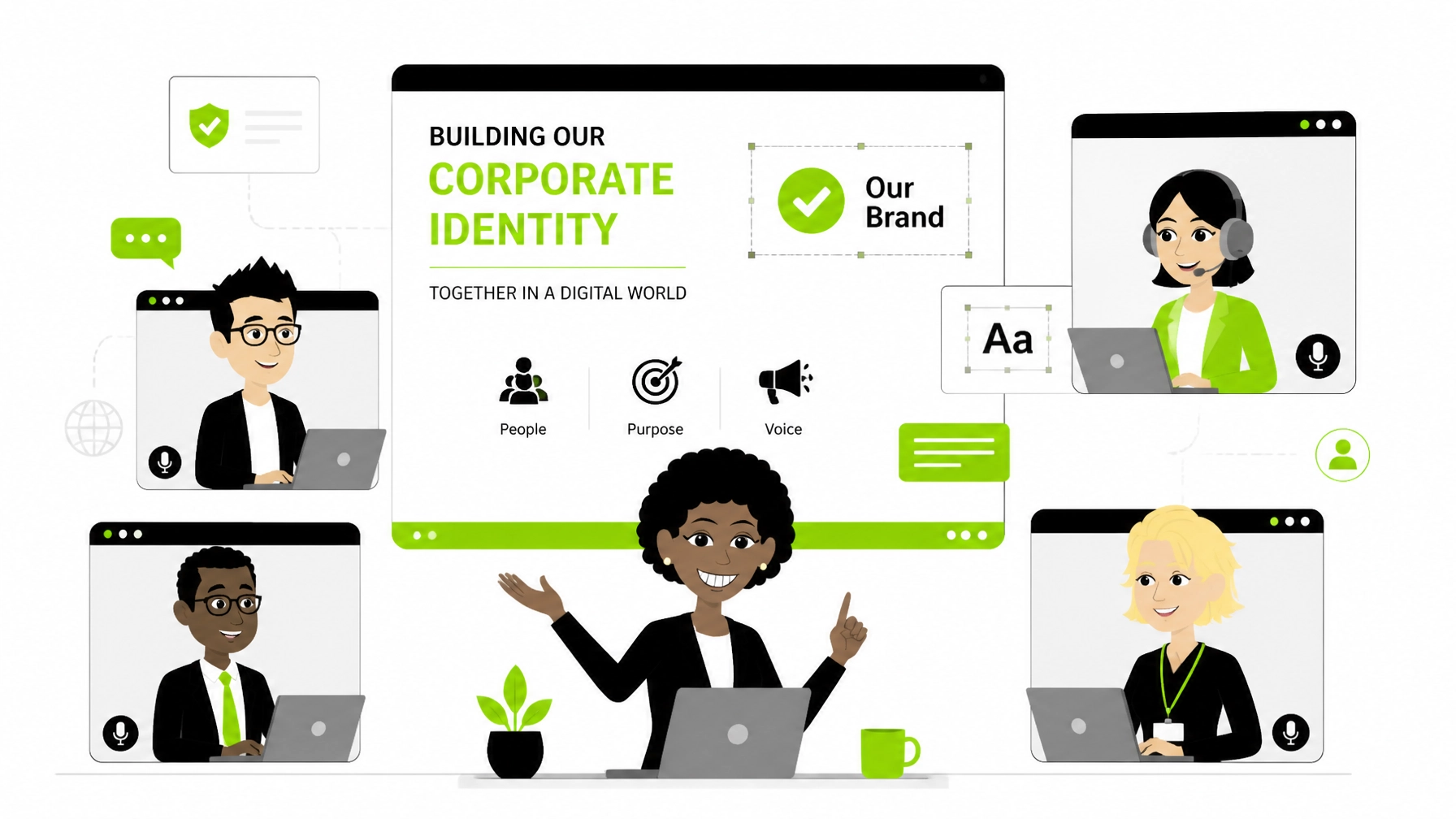
Corporate identity is the complete visual and communicative system through which a business presents itself to the world. It encompasses your logo, colour palette, typography, imagery style, tone of voice, stationery, signage, digital assets, and more — all working together as a unified whole.
It is not simply how you want your business to look. It is how your business is perceived — by customers, partners, competitors, and prospective employees. That distinction matters enormously.
Strong corporate identity delivers measurable benefits:
- Trust and credibility: Consistent, professional branding signals that a business is established and reliable. Consumers are significantly more likely to purchase from brands they recognise and trust.
- Differentiation: In crowded markets, identity is often the deciding factor. A distinctive brand identity separates you from competitors offering similar products or services.
- Recall and loyalty: Recognisable visual identity makes your business easier to remember, and easier to return to.
- Internal cohesion: A well-defined identity gives your team a shared sense of purpose and values — particularly important for growing businesses.
- Marketing efficiency: When your identity is clear and consistent, every marketing asset — from a social post to a trade stand — is faster and cheaper to produce.
In short, corporate identity is the strategic infrastructure beneath everything else your business does publicly. Without it, every other investment in marketing, design, or digital presence is working harder than it needs to.
What Is the Difference Between a Logo and a Brand Identity?
This is one of the most common misconceptions we encounter. A logo is a mark — a graphic symbol or wordmark that identifies your business. A brand identity is the entire visual system that logo lives within.
Think of it this way: your logo is a single instrument; your brand identity is the full orchestra. A logo on its own, without a defined colour palette, consistent typography, and clear usage guidelines, will look different on a business card than it does on a website, and different again on a social media profile. The result is a fragmented, unprofessional appearance — even if the logo itself is beautifully designed.
A complete brand identity typically includes:
- Primary and secondary logo variations
- Colour palette (primary, secondary, and neutral tones with precise hex, RGB, and CMYK codes)
- Typography system (heading and body font pairings)
- Iconography and graphic elements
- Photography and imagery guidelines
- Tone of voice principles
- Brand usage guidelines (sometimes called a brand bible or style guide)
At Zest City, we always design identity systems rather than isolated logos. This ensures your brand performs consistently whether it appears on a letterhead, a website, or a digital advertisement — and it means your website design and offline materials always speak the same visual language.
What Is Included in a Corporate Identity Package?
The scope of a corporate identity package varies depending on the agency and the needs of the business, but a comprehensive offering from a reputable UK agency should cover the following:
Discovery and Strategy
Before any design begins, there should be a structured discovery phase — exploring your business goals, target audience, competitive landscape, and values. This strategic foundation is what separates purposeful branding from cosmetic decoration.
Logo Design and Variations
A full suite of logo versions: primary, secondary (stacked or horizontal), monochrome, reversed, and favicon versions to ensure flexibility across all applications.
Colour Palette and Typography
Professionally selected colour systems and font pairings with full technical specifications for both digital and print use.
Brand Collateral
Depending on your package, this may include business card design, letterheads, email signatures, presentation templates, social media profile assets, and more. Ensuring your brand is consistent across your social media presence is just as important as consistency in print.
Brand Guidelines Document
A clear, accessible guide that tells anyone producing content on behalf of your business exactly how to use your brand correctly. This is arguably the most undervalued deliverable in the entire process — and the most important for long-term consistency.
Our corporate identity design services at Zest City are structured to deliver all of the above, with packages tailored to businesses at every stage — from start-ups establishing their first identity to established companies undertaking a full rebrand.
How Much Does Brand Identity Design Cost in the UK?
Brand identity design costs in the UK vary widely depending on the scope of work, the experience of the agency, and the complexity of your requirements. Here is a realistic overview of the current market:
- Freelance designers: £300–£1,500 for logo and basic assets. Limited strategic input; quality varies significantly.
- Small boutique agencies: £1,500–£5,000 for a fuller identity package including guidelines. Better process, more consistency.
- Mid-tier digital agencies (such as Zest City): £3,000–£10,000 for a comprehensive identity system including strategy, full design suite, collateral, and guidelines. Ideal for SMEs and growing businesses.
- Large branding agencies: £15,000–£100,000+. Suited to enterprise-level businesses or major rebrands with complex requirements.
It is worth noting that the cheapest option rarely represents good value. A poorly executed identity often costs far more to fix — in redesign fees, reprinted materials, and the harder-to-quantify cost of lost customer trust — than a quality investment upfront would have.
At Zest City, we offer transparent, fixed-price packages designed to give UK SMEs access to agency-quality brand identity without enterprise-level costs.
Ready to invest in your brand? Request a free digital audit from Zest City — we’ll review your current identity and outline exactly what a stronger brand could do for your business.
When Should a Business Rebrand?
Rebranding is a significant undertaking, and it should not be taken lightly — but there are clear signals that the time has come. Consider a rebrand when:
- Your identity no longer reflects your business: Your offering, audience, or positioning has evolved significantly since your original branding was created.
- You are entering new markets: Expanding geographically or into new sectors often requires an identity that communicates broader credibility.
- You have merged or acquired another company: A unified identity is essential following any significant structural change.
- Your brand looks dated: Design trends evolve. An identity that looked contemporary in 2012 may now be actively undermining customer confidence.
- You are struggling to attract the right customers: If your marketing is working but attracting the wrong audience, your identity may be sending the wrong signals.
- Your brand is inconsistent across touchpoints: If your website, social profiles, and printed materials all look slightly different, you do not have a brand — you have a collection of assets.
A rebrand does not always mean a complete overhaul. Sometimes a brand refresh — updating typography, refining a colour palette, or modernising a logo — achieves the necessary result at a fraction of the cost. A skilled agency will help you identify the right level of intervention for your situation.
How Corporate Identity and Web Design Work Together
One of the most common mistakes UK businesses make is commissioning a new website before establishing — or reviewing — their corporate identity. The result is predictable: a well-built website that feels visually inconsistent, or a brand identity that has to be retrofitted to a site it was never designed for.
At Zest City, our approach integrates identity and digital from the outset. When your brand guidelines are in place before development begins, your new website inherits colours, typography, imagery rules, and tone of voice that are already defined — making the build process faster, the results more cohesive, and the final site far more effective as a commercial tool.
The same principle applies to ecommerce development. A consistent brand identity across product pages, checkout flows, and email communications builds the customer trust that drives conversion and repeat purchase.
 Corporate Identity and Digital Marketing: Why Consistency Drives Results
 Corporate Identity and Digital Marketing: Why Consistency Drives Results
Your corporate identity does not stop at print and digital design — it extends into every channel through which your business communicates. This includes paid search ads, email campaigns, social content, and even your customer service tone.
Research consistently shows that brand consistency across all channels increases revenue by an average of 10–20%. For small and medium-sized businesses, this is not a trivial figure. It is the compound effect of every customer touchpoint reinforcing the same clear, trustworthy signal.
When Zest City develops a brand identity for a client, we build it with all downstream marketing applications in mind — so that whether you are running a Google Ads campaign, a social media push, or a content marketing programme, every execution draws from the same coherent visual and verbal system. Our website marketing services are always delivered with brand consistency as a non-negotiable starting point.
What Makes a Good Corporate Identity Agency in the UK?
Choosing the right agency is as important as the decision to invest in branding at all. Here is what to look for:
A clear strategic process
A reputable agency will want to understand your business deeply before opening a design tool. If an agency jumps straight to logos without asking about your audience, competitors, and goals, that is a warning sign.
A strong, varied portfolio
Look for evidence that the agency can adapt its approach to different sectors, tones, and audiences — not just replicate the same house style for every client.
Transparent pricing and deliverables
You should know exactly what you are getting and what it will cost before any work begins. Fixed-price packages with clearly defined deliverables protect both parties.
An integrated capability
An agency that can take your new identity directly into website design, digital marketing, and content production is almost always more effective — and more cost-efficient — than working with multiple separate suppliers. Zest City, as a full-service UK digital agency, offers exactly this integrated approach.
Post-delivery support
Brand guidelines are only useful if they are used correctly. Look for an agency that offers ongoing support — whether that means producing new assets, advising on new applications, or reviewing materials produced by third parties.
Looking for a trusted branding partner? Explore Zest City’s corporate identity design services — or get in touch to speak with one of our designers about your project.
Frequently Asked Questions: Corporate Identity and Branding in the UK
 Frequently Asked Questions: Corporate Identity and Branding in the UK
What is the difference between corporate identity and branding?
Corporate identity refers to the visual and communicative system a company uses to present itself — logos, colours, typography, stationery, and digital assets. Branding is a broader concept that includes corporate identity but also encompasses brand values, personality, customer experience, and reputation. In practice, the two terms are often used interchangeably, but a well-rounded approach addresses both the visual system (identity) and the strategic positioning (brand).
How long does it take to develop a brand identity?
For a small to mid-sized UK business, a comprehensive corporate identity project typically takes between four and ten weeks from initial briefing to final delivery. The timeline depends on the complexity of the brief, the number of revision rounds, and how quickly the client is able to provide feedback. At Zest City, we agree a clear project timeline at the outset so there are no surprises.
Do I need brand guidelines if I am a small business?
Yes — arguably more so than a large business. Small businesses often work with a wider range of external suppliers, freelancers, and platforms, all of which need to represent the brand consistently. Without a brand guidelines document, your identity will drift over time. Even a concise, single-page style guide specifying your logo usage, colours, and fonts makes an enormous difference to long-term consistency.
Can I just use a logo design tool or AI to create my brand identity?
Logo generators and AI tools can produce serviceable marks quickly and cheaply, and for very early-stage businesses with minimal budgets, they may be a pragmatic starting point. However, they cannot replicate the strategic thinking that defines what your brand should communicate, to whom, and why. They also lack the ability to produce fully specified, print-ready assets or brand guidelines. For any business that intends to grow, a professionally developed identity is a more sustainable investment.
How do I brief a design agency for a brand identity project?
A good agency will guide you through their own briefing process, but it helps to arrive with clarity on: your target audience and their expectations; your key competitors and how you want to differ from them; the values and personality you want your brand to project; any preferences or aversions